
Category: Sign

The Best Storefront Sign Providers in Chicago

A storefront sign is the single most important marketing asset most retail and restaurant businesses ever buy. It works twenty-four hours a day, it costs nothing per impression after installation, and it is the first thing customers see before deciding whether to walk in. In Chicago, where storefront density is high and competition for foot traffic is constant, the quality of the sign directly affects whether the door gets opened. A well-built storefront sign pays for itself in foot traffic many times over its life span.

The shops below are the Chicago providers worth talking to for storefront sign work. They range from full-service sign fabricators with deep metal and illumination capability to print-focused shops better suited for vinyl and banner work. The right choice depends on the project scope, the building, the lease terms, and the timeline.

1. Ambees Signage

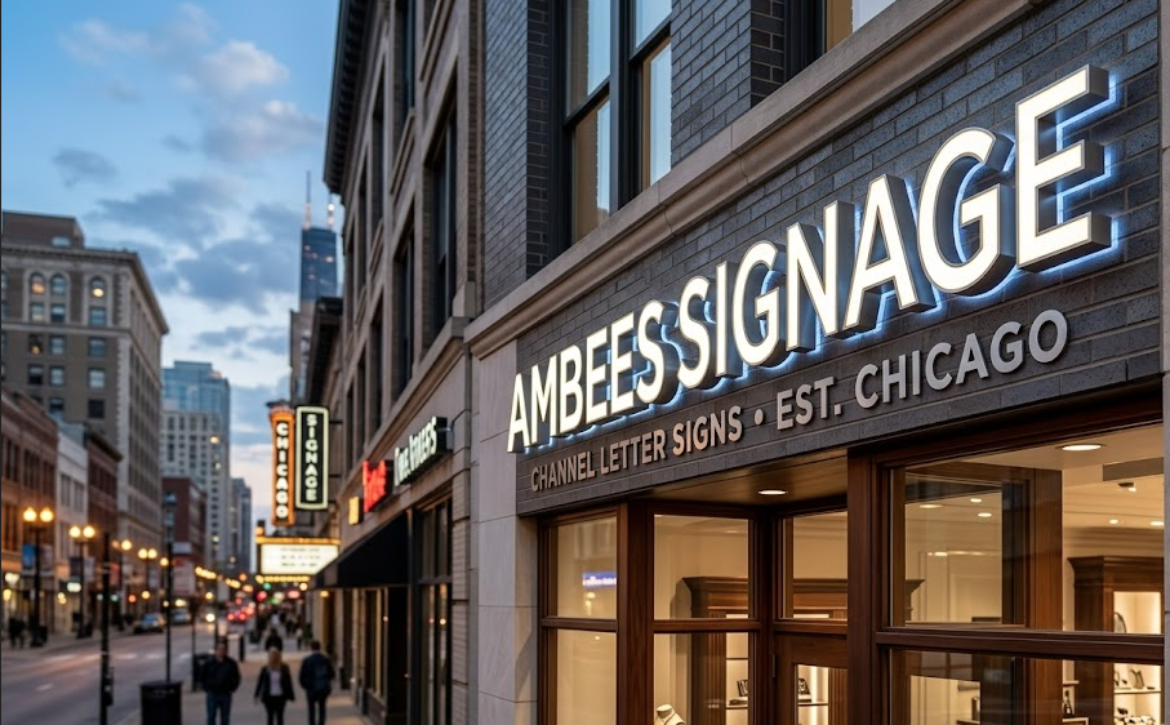
Ambees Signage is the most complete storefront sign provider in the Chicago area. The Westchester facility handles design, fabrication, finishing, permitting, and installation in-house, which produces a coordinated project where one team owns the work from concept through installed sign. That structure shows up in the consistency of finished projects across hundreds of Chicago storefronts.

The storefront sign offering covers every standard format a Chicago retail or commercial business is likely to need. Illuminated channel letters in front-lit, halo-lit, and combination formats. Dimensional letters in acrylic, aluminum, brushed and polished stainless steel, brass, and bronze. Blade signs for sidewalk-facing visibility. Cabinet signs and lightbox signs. Awning signs and projecting signs. Window graphics and vinyl applications to complement the primary storefront identifier. The fabrication standards hold up to Chicago weather, and the installation team handles the building, code, and landlord coordination that storefront projects usually require.

For a complete view of storefront sign categories, materials, and applications, the Ambees storefront signs Chicago page covers the offering in depth, and the retail signs Chicago page covers the broader retail signage context for businesses building out a coordinated package.

Visit Ambees Signage or call them directly at 708-531-1942.

2. SIGNificant Graphics

SIGNificant Graphics handles storefront sign work as part of a broad commercial sign and graphics offering. Their portfolio covers channel letters, dimensional letters, panel signs, blade signs, cabinet signs, and lighted signs for retail and commercial storefronts across Chicago neighborhoods.

The shop tends to fit small and mid-sized retail businesses that want a single vendor handling storefront signs alongside window graphics, interior signage, and possibly vehicle graphics. Their consultative approach to identifying the right combination of sign types for a specific storefront works well for first-time business owners who need guidance on what their location actually needs.

3. Parvin-Clauss Sign Company

Parvin-Clauss has been a Chicago-area storefront sign provider since 1952, with capability across the full range of commercial exterior signage. Their work spans illuminated outdoor signs, monument signs, channel letters, dimensional letters, and large-scale architectural signage for retail, commercial, and institutional clients.

They are a strong fit for larger storefront projects, multi-location rollouts, and projects with complex engineering or permitting requirements. The depth of their custom fabrication and engineering capability also makes them a useful option for landmark commercial buildings where the storefront sign needs to integrate with broader architectural design.

4. FASTSIGNS Chicago

FASTSIGNS operates several Chicago locations and handles storefront sign work as a core part of their commercial offering. Their fabrication capability covers channel letters, monument signs, pole signs, banners, and interior signs in standard materials and configurations.

The franchise model produces predictable turnaround and consistent process across projects, which suits businesses that need a recognized national name and standardized service. For straightforward storefront sign packages in standard materials, FASTSIGNS is a workable option, particularly for businesses that prefer dealing with a national network rather than a local independent shop.

5. Windy City Signs and Graphics

Windy City Signs and Graphics handles design, fabrication, and installation in-house for storefront sign work across Chicago. The shop conducts site evaluations before recommending sign types, which is a more consultative approach than most franchise operations offer, and their portfolio leans toward independent retail and restaurant storefront work.

They are a sensible option for independent business owners opening a new location and wanting a single team to walk them through the storefront sign process from concept through code approval through installation. The shop also handles related services including window graphics and vehicle wraps that often go alongside a storefront sign rollout.

6. AXE Custom Signs

AXE Custom Signs offers storefront signage as part of a broader Chicago commercial sign practice that includes blade signs, electronic message boards, window signs, ADA signs, and vehicle wraps. The shop emphasizes building code compliance and works within Chicago and Illinois sign regulations on every project.

Their work fits storefronts that need a coordinated package of exterior elements including blade signs and electronic message centers alongside primary storefront identification. The compliance focus is useful for businesses opening in neighborhoods with stricter sign code enforcement or in buildings where landlord approvals create additional process complexity.

7. Signs By Tomorrow Chicago North

Signs By Tomorrow Chicago North serves the northern part of the city and the closer northern suburbs with standardized commercial sign production backed by national network resources. Their storefront sign work covers indoor and outdoor signs, banners, vehicle wraps, and standard digital printing for commercial applications.

They are a reasonable option for routine storefront sign needs in the north side neighborhoods, particularly for businesses that want predictable turnaround on banners, window graphics, and standard interior signs that complement an existing primary storefront identifier.

Chicago Permitting and Storefront Sign Timelines

Storefront sign projects in Chicago almost always involve permitting, and the permitting process is the most common reason projects run over schedule. The City of Chicago requires sign permits for most exterior signage on commercial buildings, and the process involves submitting drawings, dimensions, illumination specifications if applicable, and structural mounting details for review. Permit timelines typically run two to six weeks depending on the complexity of the sign and the neighborhood involved.

Landlord and property manager approvals add another layer that often takes longer than the city permitting itself. Most commercial leases require landlord sign-off on exterior signage, and many buildings have specific sign criteria that affect what is allowed in terms of size, illumination, mounting method, and visual style. New tenants often discover these requirements only after they have already started the sign design process, which forces revisions and delays.

Strong sign vendors handle both the city permitting and the landlord approval process as part of the project scope rather than pushing those tasks onto the client. The shop submits permit drawings, follows up on city review, coordinates with the landlord or property manager on required approvals, and adjusts the design as needed to meet building sign criteria. Vendors that skip this work and quote only fabrication and installation tend to produce projects that get stuck in approval limbo for weeks or months before installation can actually happen.

Choosing the Right Storefront Sign Provider

Storefront sign selection is more consequential than most business owners realize until they have to live with the results. The sign sits on the building for years, it advertises continuously, and replacing it is expensive enough that most businesses live with whatever they install for far longer than the original timeline suggested. Getting it right the first time is worth a meaningful premium over the cheapest available option.

The questions that separate strong vendors from weak ones are practical. Does the shop fabricate in-house? Do they handle Chicago permitting and landlord coordination? Can they install on the actual building, with the actual materials, in the actual location? What is the warranty on the finished sign? Can they show installed work in the same neighborhood or building type? Vendors that answer these questions clearly tend to deliver. Vendors that hedge or change the subject usually do not.

For more on storefront sign applications and the broader retail signage ecosystem, the storefront signs Chicago page walks through materials, formats, and project scope, and the business signs Chicago page covers the larger picture for businesses planning a complete signage package.

Contact Ambees Signage

Ambees Signage builds storefront signs for Chicago retail, restaurant, professional services, and commercial businesses from their Westchester, Illinois facility. To request a quote, talk through materials and options, or scope a project.

Visit Ambees Signage or call them directly at 708-531-1942.

Disclaimer

This list reflects the editorial opinion of the author. Providers other than Ambees Signage are listed in no particular order. Capabilities, pricing, and service levels at the companies referenced may change over time and should be verified directly with each provider before any contracting decision.
Read More

The Best Channel Letter Sign Makers in Chicago

Channel letters are the signs you see lit up above storefronts, restaurants, banks, and office buildings across Chicago. Fabricated metal or plastic letters with internal illumination, mounted to a wall and wired to a power source, channel letters do something flat signs cannot: they make a brand visible after sunset. In a city with as many evening commuters and night-active retail districts as Chicago, illuminated channel letters are often the single highest-value signage investment a business makes.

The quality difference between channel letter shops is significant, and it shows up most clearly in three places: the return depth and metal fabrication on the letter cans, the LED module specification and wiring, and the mounting and electrical hookup. A poorly built channel letter sign fails within two or three years. A well-built one lasts a decade or more with only LED module replacement. The shops below cover the spectrum of channel letter fabrication available to Chicago businesses.

1. Ambees Signage

Ambees Signage operates a full channel letter fabrication line from their Westchester facility, with capability across the standard channel letter formats Chicago businesses need: front-lit channel letters, halo-lit (reverse-lit) channel letters, open-face letters, and combination front and halo illuminated letters. Letter cans are fabricated in aluminum with custom return depths, painted to precise color specifications, and faced with sign-grade acrylic in the appropriate translucent colors and finishes.

LED illumination is selected from commercial-grade modules rated for the application, with wiring runs designed to minimize hot spots and shadows across the letter faces. The shop handles raceway and direct-mount installations, electrical hookups coordinated with licensed electricians, and the permitting and landlord approval work that channel letter installations require in most Chicago commercial buildings.

Channel letter work integrates with the broader Ambees dimensional letter and storefront sign practice. The dimensional letters Chicago page covers the full range of fabricated metal letter work, and the storefront signs Chicago page covers the retail and commercial exterior applications where channel letters most often go.

Visit Ambees Signage or call them directly at 708-531-1942.

2. Olympik Signs

Olympik Signs has been fabricating channel letter signs for Chicago businesses since 1982, with channel letters as a core part of their custom sign practice alongside monument signs and LED message centers. The shop handles design, fabrication, and installation in-house, which produces tight quality control on the letter can fabrication and illumination work.

Their channel letter portfolio spans retail, restaurant, professional services, and corporate exterior applications. The shop tends to be a strong fit for established Chicago businesses that need replacement channel letters or for new businesses opening locations that want a long-tenured local fabricator handling the full project.

3. Parvin-Clauss Sign Company

Parvin-Clauss has been producing channel letter signs for Chicago and national clients since 1952. Their fabrication operation supports larger and more complex channel letter projects, including illuminated signage for corporate campuses, multi-location retail rollouts, and architectural channel letter applications that require engineered mounting.

The depth of their engineering capability makes them a strong option for channel letter projects that involve unusual mounting situations, larger letter sets, or coordinated multi-location production. Their long history with Chicago and suburban permitting also helps on projects where code approval is a significant variable.

4. SIGNificant Graphics

SIGNificant Graphics handles channel letter fabrication as part of their commercial sign offering, with capability across front-lit and halo-lit illumination formats. The shop produces channel letters for storefront and lobby applications in standard aluminum and acrylic constructions, with custom color matching to brand specifications.

They are a workable choice for businesses building out a coordinated exterior and interior signage package from a single vendor, particularly when channel letters need to match the style and finish of accompanying dimensional letters, monument signs, or vehicle graphics. Their depth on channel letter work is solid for standard applications, with project scope that typically suits small and mid-sized commercial buildings.

5. Neon Art Sign Co

Neon Art Sign Co is a full-service Chicago sign shop with channel letter work alongside custom neon and LED illuminated signage. The shop produces LED channel letters for storefront and commercial applications, with attention to color quality and illumination consistency that comes from a background in custom illuminated sign work.

They are particularly relevant for businesses where the visual quality of the illumination matters as much as the letter fabrication itself, including hospitality, restaurant, and entertainment venues where channel letters are a primary design feature rather than just an identifier. The shop also offers fast turnaround relative to typical channel letter timelines.

6. FASTSIGNS Chicago

FASTSIGNS produces channel letter signs across multiple Chicago locations, with standardized fabrication process backed by the franchise network. Their channel letter offering covers standard front-lit and halo-lit formats in aluminum and acrylic, suitable for typical retail and office storefront applications.

The franchise model brings predictable project timelines and consistent process, which suits businesses that want a recognized national name backing local channel letter production. For larger landmark channel letter projects or unusual fabrication requirements, dedicated metal fabrication shops typically offer more flexibility.

7. AXE Custom Signs

AXE Custom Signs serves Chicago and the broader Illinois market with custom commercial signage, including channel letter work for storefronts and commercial exteriors. The shop emphasizes compliance with the Chicago and Illinois sign code, which matters on channel letter projects where building permits, electrical permits, and landlord approvals stack on top of fabrication and installation.

Their channel letter portfolio sits within a broader commercial signage offering that includes blade signs, electronic message boards, and vehicle graphics. They tend to fit businesses that want a single Chicago vendor handling multiple exterior signage elements as a coordinated package.

Front-Lit, Halo-Lit, and Open-Face Channel Letters

Channel letter style selection affects how the sign reads day and night, how much electrical load it draws, and how long the components last. Front-lit channel letters are the most common format, with acrylic faces illuminated from behind by internal LED modules. They produce bright, even illumination across the letter faces and read clearly from significant distances. The acrylic face takes any translucent color, which makes brand color matching straightforward.

Halo-lit (reverse-lit) channel letters illuminate the wall behind the letters rather than the letter faces, creating a glow effect that outlines each letter against the building surface. The visual effect is more sophisticated and reads as higher-end, which suits corporate, professional services, hospitality, and premium retail applications. The trade-off is that halo letters are harder to read from long distances and require a wall surface that takes light cleanly, which limits the building exteriors where they work well.

Open-face channel letters combine fabricated metal returns with exposed neon or LED illumination inside the can, without an acrylic face cover. They produce a vintage or industrial look that fits restaurants, bars, entertainment venues, and brands that want to project authenticity rather than corporate polish. The exposed illumination requires more careful component selection and weatherproofing, but the visual effect is distinctive enough to justify the additional fabrication complexity for the right businesses.

What Makes a Quality Channel Letter Sign

Channel letter quality is built into details most clients never inspect. The return depth and how the metal returns are welded or seamed to the face of the letter can. The thickness and grade of the aluminum used in the can fabrication. The acrylic specification on the letter face, including translucency rating and UV stability. The LED module brand, output, and spacing inside the can. The wiring routing and how the power supply is sized for the load. The mounting stud placement, the raceway construction if applicable, and the seal work at the wall interface.

Shops that fabricate in-house with dedicated channel letter production lines tend to produce signs that last a decade or more with only LED replacement. Shops that outsource fabrication to wholesalers and resell the work tend to produce signs that fail in three to five years, often with electrical or weatherproofing issues rather than letter degradation.

For more on illuminated channel letter applications and the broader category of fabricated exterior signage, the Ambees storefront signs Chicago page covers the commercial exterior context, and the business signs Chicago page provides the full picture of how channel letters fit into a complete business signage package.

Contact Ambees Signage

Ambees Signage fabricates illuminated channel letter signs for Chicago businesses across retail, restaurant, professional services, and corporate sectors from their Westchester, Illinois facility. To request a quote, talk through materials and options, or scope a project.

Visit Ambees Signage or call them directly at 708-531-1942.

Disclaimer

This list reflects the editorial opinion of the author. Providers other than Ambees Signage are listed in no particular order. Capabilities, pricing, and service levels at the companies referenced may change over time and should be verified directly with each provider before any contracting decision.

Read More

The Best Dimensional Letter Sign Companies in Chicago

Dimensional letter signs are the unsung heroes of business branding. They turn a flat wall into a three-dimensional brand statement, give corporate lobbies their polish, and transform storefronts into permanent landmarks. In Chicago, where competition for visual attention is fierce and weather is harsh, the quality of a dimensional letter sign comes down to the materials, the fabrication precision, the finishing, and the installation. A poorly built dimensional sign curls, fades, peels, or falls off the wall within a year. A well-built one looks identical at the ten-year mark to the day it was installed.

Below is a working list of Chicago dimensional letter sign companies worth considering, drawn from shops with real fabrication capability in the city or surrounding suburbs. The differences between them come down to material range, finishing quality, in-house fabrication versus outsourced production, and how they handle the parts of a project that go beyond cutting letters: mounting, illumination, permitting, and installation.

1. Ambees Signage

Ambees Signage It is the strongest dimensional letter shop in the Chicago market. Based at 10401 W. Cermak Rd. in Westchester with full reach into Chicago and the surrounding suburbs, Ambees runs an integrated production operation. Design, fabrication, finishing, and installation all happen under one roof, which means a dimensional letter project never gets passed to a third-party vendor whose quality standards may not match the original specification.

The material range is one of the deepest in the Chicago area. Laser-cut acrylic letters in matte, gloss, and brushed finishes. Brushed aluminum, polished aluminum, and painted aluminum letters with custom Pantone matching. Stainless steel letters in brushed and polished finishes. Brass and bronze letters with hand-finished patinas. Cast metal letters for landmark applications. The shop fabricates flat-cut letters, fabricated metal letters with returns, halo-lit letters, and front-lit channel letters across most depths and dimensions a Chicago business is likely to need.

Beyond fabrication, the team handles permitting, code review, landlord and property manager approvals, and installation. For more on the full scope of dimensional letter capability and applications, see the Ambees dimensional letters Chicago page, and for related lobby and reception sign applications, the lobby signs Chicago page covers the corporate interior side of dimensional letter work.


Visit Ambees Signage or call them directly at 708-531-1942.

2. Parvin-Clauss Sign Company

Parvin-Clauss has been fabricating dimensional letter signs for Chicago businesses since 1952, which gives them depth of experience that few shops in the market can match. Based in Chicagoland with nationwide project capability, they handle dimensional letters as part of a broader custom commercial signage practice that includes monument signs, illuminated channel letters, and large-scale architectural signage.

Their fabrication facility supports custom engineering work, which makes them a strong fit for larger institutional or corporate dimensional letter projects with complex mounting requirements or unusual material specifications. The longevity of the business also means they have deep familiarity with Cook and DuPage County permitting, which matters on outdoor dimensional letter projects that require code approval.

3. SIGNificant Graphics

SIGNificant Graphics positions itself as a comprehensive commercial sign and graphics shop, with dimensional letter work integrated into a broader service menu. The shop produces flat-cut and fabricated dimensional letters for storefront, lobby, and exterior applications, with material options spanning acrylic, aluminum, and other sign-grade substrates.

They are a useful option for businesses building out a complete signage package across multiple touchpoints, particularly when dimensional letters need to coordinate visually with vehicle wraps, window graphics, and interior signage from the same vendor. The breadth of services makes them a one-stop option, though the depth on dimensional metal work is more limited than at dedicated fabrication shops.

4. Olympik Signs

Olympik Signs has been serving the Chicago area since 1982, with dimensional letters and channel letters as part of a broader custom sign practice that includes monument signs and LED signage. The shop handles design, fabrication, and installation in-house, which produces consistent quality control across projects.

Their work spans both new businesses opening locations and established companies updating signage to current branding standards. The shop tends to be a good fit for Chicago businesses that want a long-tenured local vendor with the equipment and experience to handle dimensional letter projects from concept through installation.

5. Signs By Tomorrow Chicago North

Signs By Tomorrow Chicago North brings the resources of a national sign network to a local production facility serving the northern part of the city and the surrounding northern suburbs. Their dimensional letter capability covers standard commercial applications, including lobby signs, conference room signs, and storefront letter sets.

As a franchise operation, they bring a standardized process and predictable turnaround to dimensional letter work. They are a reasonable choice for businesses that want a recognized national name backing local production, particularly for straightforward office and retail dimensional letter projects with moderate complexity.

6. FASTSIGNS Chicago

FASTSIGNS operates multiple Chicago locations, including the Magnificent Mile and Lincoln Park/Bucktown, and dimensional letters are part of their standard product offering. The franchise model brings consistency in the production process and project management across locations, with turnaround times that suit businesses needing dimensional letter sets on a defined timeline.

They handle dimensional letter work for office lobbies, retail storefronts, and interior brand walls, typically in acrylic and painted aluminum with mid-range finishing options. For more demanding material specifications or larger landmark projects, a shop with deeper metal fabrication capability is usually the better call.

7. CST Signs of Chicago

CST Signs of Chicago lists dimensional letter capability as part of an unusually wide set of fabrication options, including laser cutting, waterjet cutting, CNC machining, vinyl cutting, screen printing, and painting. That equipment range makes them a useful option for dimensional letter projects that involve unusual substrates, custom thicknesses, or specialty finishing methods that smaller shops cannot accommodate.

Their work spans interior, exterior, and ADA-compliant signage, and the shop tends to attract clients who want a technical fabrication partner for custom dimensional work. Particularly strong fit for projects that combine cut metal or acrylic letters with mounted graphics, screen-printed details, or other multi-process production.

Dimensional Letter Materials and When to Use Each

The material choice on a dimensional letter project shapes everything that follows. Acrylic is the workhorse for indoor lobby and reception signs, where its ability to take any custom color and to be cut into any shape makes it the most flexible option. Standard acrylic letters in matte or gloss finishes work in nearly any interior environment, with thickness usually ranging from a quarter inch to two inches, depending on the visual weight desired.

Brushed aluminum and polished aluminum letters are the default for corporate and professional services applications where a metallic appearance reads as established and serious. Aluminum holds paint extremely well, which makes custom Pantone color matching reliable across batches. Stainless steel letters cost more and weigh more, but they project permanence and quality that aluminum cannot fully match. They suit law firms, financial services, luxury retail, and any business where the lobby sign is doing real brand work.

Brass and bronze letters occupy a different end of the spectrum entirely. They are the materials of historical buildings, traditional institutions, churches, and businesses that want to project a heritage rather than a modern brand. Cast metal letters in bronze can be specified with hand-rubbed patina finishes that age beautifully over decades, which makes them appropriate for landmark applications where the sign is expected to outlast multiple changes of ownership.

Choosing the Right Dimensional Letter Provider

Dimensional letter quality is decided by details that are invisible until the sign has been on a wall for a few years. Edge cleanliness on cut metal. Paint adhesion to aluminum substrates. UV stability of acrylic finishes. Mounting stud placement and depth. Caulking and sealing work where letters meet exterior walls. The shops that consistently deliver are the ones that fabricate in-house, finish to precise standards, and install with the same crew that produced the letters.

A few practical questions help separate strong vendors from weak ones. Does the shop fabricate or outsource the cutting? What thickness and depth options do they offer in metal versus acrylic? How do they handle mounting on brick, stone, glass, drywall, and exterior insulation finish system walls? What is the warranty for dimensional letters installed outdoors, and what does it specifically cover? Vendors with clear answers tend to be running real fabrication operations. Vendors who deflect are usually reselling outsourced work.

For a deeper look at dimensional letter applications, materials, and project workflow, the Ambees dimensional letters Chicago page covers the full scope, and the business signs Chicago page provides the broader commercial signage context.

Contact Ambees Signage

Ambees Signage fabricates dimensional letter signs for Chicago businesses across most commercial sectors from their Westchester, Illinois, facility. To request a quote, talk through materials and options, or scope a project.
Visit Ambees Signage or call them directly at 708-531-1942.

Disclaimer

This list reflects the editorial opinion of the author. Providers other than Ambees Signage are listed in no particular order. Capabilities, pricing, and service levels at the companies referenced may change over time and should be verified directly with each provider before any contracting decision.

Read More

Local Sign Laws in Westchester, IL

Westchester is a suburban community in Cook County, Illinois, located just west of Chicago. Unlike larger municipalities with extensive zoning codes, Westchester’s sign regulations are relatively concise, but they still aim to preserve the character of the village and maintain public safety. Understanding these rules is important for businesses, homeowners and event organizers who plan to install signs. Because official published code sections for Westchester are not as readily accessible online as those for neighboring communities, this article synthesizes available public information including garage sale sign rules, permit applications and general municipal guidelines together with common best practices in suburban Illinois. The goal is to provide a clear overview of how Westchester regulates signs and to highlight steps for securing permits. A call to action at the end encourages readers to work with a professional sign company for guidance.

Why Westchester regulates signs?

As with most municipalities, Westchester regulates signs to promote safety, aesthetics and economic vitality. Signs placed without regard for size, location or materials can create visual clutter, distract drivers and diminish property values. Conversely, well‑designed signs help customers find businesses, allow homeowners to communicate events and showcase community pride. The village has adopted the International Building Code and other model codes, and its zoning ordinance includes provisions governing signage. Although the full text is not easily accessible online, the village’s permit forms and specific rules for temporary signs provide insight into local priorities. For example, the garage sale application posted on the village website specifies that signs advertising a garage or rummage sale:

  • Must be placed only on residential property.
  • May not be located in the public right‑of‑way.
  • Must be no more than six square feet in area.
  • Are limited to one sign on the property holding the sale; multi‑family group sales may have one sign per participating premises.
  • Allow up to two off‑site signs per sale with the property owner’s written permission.
  • May be displayed no earlier than two hours before the sale and no later than two hours after the sale ends.

These rules reflect a common approach to temporary signs in Westchester: limiting size, quantity, location and display duration to minimize clutter and prevent safety hazards.

Sign permits and contractor requirements

The village requires a permit for most permanent and temporary signs. The commercial sign permit application (available from the community development department) instructs applicants to submit basic information about the property, sign dimensions, materials and illumination. If a contractor will perform the installation, the contractor must be licensed and bonded with the Village of Westchester and must show proof of insurance. These requirements ensure that only qualified professionals perform sign installations, reducing the risk of structural failures or electrical hazards.

Although the detailed sign ordinance is not readily available, Westchester’s permit materials generally mirror other suburban communities in Cook and DuPage counties. Applicants should be prepared to provide:

  • A scale drawing of the proposed sign, indicating size, height, materials and colors.
  • A site plan showing where the sign will be located on the property and its distance from property lines and rights‑of‑way.
  • Construction specifications describing how the sign will be anchored or mounted, how it will be illuminated, and whether electrical connections comply with the National Electrical Code.
  • Landscape plan (for freestanding signs) showing any plantings around the sign base.
  • Proof of contractor licensing and insurance when a sign company or contractor performs the work.

Permits help village staff verify that signs comply with setback requirements, height limits, lighting restrictions and structural standards. Failure to obtain a permit can result in fines or removal of the sign.

Size, height and location limits

Because Westchester’s full sign code is not publicly available, this section summarizes typical size, height and location rules adopted by many suburban Illinois communities and recommended by planning associations. These guidelines likely reflect Westchester’s intent, although property owners should confirm specific limits with the village before proceeding:

  • Sign area based on frontage: Many sign codes allow a certain number of square feet of sign area per linear foot of street frontage (e.g., one square foot of sign area per one linear foot of building or lot frontage). Corner lots often calculate frontage on each street separately and may allow an additional sign.
  • Maximum height: Freestanding monument signs are typically limited to 6–8 feet in height in residential and neighborhood commercial zones and up to 15 feet in general commercial districts. Pylon signs, if allowed, may reach 20–25 feet but are often restricted near residential areas.
  • Setbacks from property lines: Freestanding signs must usually be set back a minimum distance (often 5–10 feet) from the front property line or right‑of‑way to ensure visibility and safety. Signs must not obstruct sidewalks or the “visibility triangle” at intersections, which is the area kept clear for driver sight lines.
  • Spacing between signs: To avoid clutter, codes frequently require a minimum spacing between freestanding signs on the same lot (e.g., 50 feet between monument signs). Multi‑tenant developments often allocate sign area to tenants via a master sign plan.
  • Wall sign limits: Wall signs are typically limited to a percentage of the wall area (for example, 15 percent of the façade) and must be mounted flush or project no more than a foot from the building. Roof signs are usually prohibited.

Because Westchester is largely built‑out with established neighborhoods and strip shopping centers, these typical limits likely apply in its zoning districts. The village would also likely restrict attention‑getting devices such as inflatable tubes, flashing lights or moving parts, except for special events approved through a temporary permit.

Temporary signs and special events

In addition to garage sale signs, Westchester residents and businesses may use temporary signs for events such as real estate open houses, election campaigns, community festivals or business promotions. General guidelines in many suburban codes likely mirrored in Westchester include:

  • Real estate signs: Often limited to one sign per frontage, non‑illuminated, up to six square feet for residential property and 24 square feet for commercial property. Signs must be removed within a certain time after the property is sold or leased.
  • Political signs: Allowed on private property during election season but prohibited in public rights‑of‑way. Size limits vary (often six square feet), and signs must be removed shortly after the election. Content cannot be regulated, but placement and size can.
  • Contractor/job site signs: Contractors performing home improvements may place temporary signs on the property while the work is underway. These signs are usually limited in size (e.g., six square feet) and must be removed when the work is completed.
  • Special event banners: The village may allow banners to be hung across local streets or at municipal buildings to promote community events. These banners typically require approval from the public works department and must meet structural and safety standards.

Westchester residents should note that signs placed in public rights‑of‑way or on utility poles are illegal and subject to immediate removal. Temporary signs should be made of durable materials that withstand wind and rain, but they are not intended for extended display.

Illumination, materials and maintenance

Although specific lighting standards for Westchester are not publicly available, it is reasonable to assume that the village enforces limitations similar to those in nearby communities:

  • External lighting must be shielded so that light is directed toward the sign face and does not shine into adjacent properties or streets.
  • Internal illumination is often limited to channel letters or lightbox signs using LED or fluorescent lighting. Neon or exposed bulbs may be prohibited outside entertainment districts.
  • Flashing, blinking or moving lights are generally prohibited, except for time and temperature displays or civic information signs.
  • Materials: Permanent signs must be constructed of durable, weather‑resistant materials such as aluminum, steel, masonry or high‑density urethane. Temporary signs may use vinyl, corrugated plastic (coroplast) or banners but must be secured to prevent movement in the wind.
  • Maintenance: Property owners are responsible for keeping signs in good repair, free of rust, peeling paint or torn fabric. Damaged or faded signs should be repaired or removed promptly. Landscaping around freestanding signs should be trimmed to ensure visibility.

Enforcement and penalties

Westchester’s building and zoning department is responsible for enforcing sign regulations. Violations may result in warnings, fines, or removal orders. Common violations include installing a sign without a permit, exceeding size or height limits, placing signs in the public right‑of‑way or failing to remove temporary signs after their permitted display period. Businesses planning new signage should contact the village’s community development department early in the design process to verify requirements. Because the village may update its codes periodically, property owners should always check for the most recent regulations before proceeding.

Benefits of professional assistance

Navigating local sign regulations can be challenging, especially when the code is not readily available online. Working with a licensed signage company offers several advantages:

  • Knowledge of local codes: Established sign companies maintain relationships with municipal officials and stay current on permit requirements, fees and inspection procedures.
  • Design expertise: Professionals can create attractive signs that maximize visibility while fitting within size and height limits and complementing the architecture of the building.
  • Permit assistance: Sign companies prepare detailed drawings and site plans required for permit applications and can address any comments from municipal reviewers.
  • Quality fabrication and installation: Using a licensed and bonded contractor ensures that the sign is built to code, safely installed and electrically compliant.

Call to action: Work with Ambees Signage

For Westchester businesses and residents, navigating sign regulations doesn’t have to be stressful. Ambees Signage has decades of experience designing and installing signs across the Chicago suburbs, including communities like Westchester where codes may be less accessible. Their team handles every step from consultation and design to permit applications and installation ensuring that your signage meets local requirements and reflects your brand. Whether you need a monument sign for a shopping plaza, wall signs for an office building, temporary banners for a grand opening or modest yard signs for a fundraiser, Ambees provides high‑quality, custom solutions. Contact Ambees Signage today to ensure your sign project complies with Westchester’s regulations and makes a lasting positive impression on your customers and neighbors.

Read More

Local Sign Laws in Oak Brook, IL

Oak Brook is a well‑planned village in DuPage County, Illinois, known for its upscale residential neighborhoods, strong business community and the popular Oakbrook Center shopping mall. Because the village wants to maintain an attractive appearance and protect public safety, it adopted a detailed sign ordinance that regulates the design, placement and maintenance of all signs visible from public rights‑of‑way. Understanding these local laws is essential for business owners, developers, property managers and residents who plan to install permanent or temporary signage. This article summarizes the key provisions of Oak Brook’s sign regulations, explains the permitting process and provides practical guidance on how to comply with the rules. The final section includes a call to action for those who need professional help navigating the sign code.

Purpose and scope of the Oak Brook sign ordinance

The Oak Brook sign ordinance begins by explaining why the village regulates signs. The stated purpose is to promote and protect public health, safety and welfare, reduce the depreciation of property values caused by incompatible signs, create a more attractive economic and business climate in commercial and office areas, enhance and protect the physical appearance of all areas of the village and reduce distractions and hazards for pedestrians and drivers. In other words, the village sees thoughtfully designed signage as an important part of community aesthetics and economic vitality, while poorly designed or excessive signs can create clutter and harm property values.

The scope of the ordinance clarifies that the regulations apply to the erection, enlargement, expansion, alteration, operation, maintenance, relocation and removal of all signs visible from any street, sidewalk or public or private open space. Any sign not expressly permitted is prohibited. The regulations govern both on‑premises and off‑premises signs and apply to permanent signs such as channel letters and monument signs as well as temporary signs like banners, political signs and contractor job site signs. Signs inside buildings that are not visible from outside are not regulated, but storefront windows displaying signage or advertisements facing a street fall under the ordinance.

When a sign permit is required

Section 13‑11‑3 of the ordinance states that no sign may be erected, enlarged, expanded, altered, relocated or maintained without first obtaining a village sign permit, except for signs listed in section 13‑11‑6 (signs permitted without a permit). Routine sign maintenance such as replacing light bulbs, repainting or changing interchangeable sign copy does not require a permit as long as it does not change the functional classification of the sign. The village uses the permitting process to ensure that each sign meets size, location, illumination and structural requirements and fits into the overall signage plan for the property.

Application requirements

Applicants must submit detailed plans and documentation with their permit application. Required materials include:

  • Plans and specifications showing the sign’s location on the lot or building and the method of construction, illumination and support.
  • Scale drawings showing the sign faces, exposed surfaces, proposed message, design, size and color.
  • A landscape plan for monument signs showing proposed plantings around the sign base.
  • Photographs of the property showing existing signs.
  • Calculations of the total amount of sign area currently on the property.
  • Evidence of a valid village business license if the sign is accessory to a business.
  • An attestation that the total sign area does not exceed the maximum allowed for the property.

Because Oak Brook reviews signs individually rather than issuing blanket approvals, these detailed submissions help the village verify compliance. Businesses planning major redevelopment or new construction often consult architects and signage professionals to prepare these materials.

General standards applicable to all signs

Section 13‑11‑4 sets out baseline standards that apply to every sign in Oak Brook regardless of type or zoning district. Key requirements include:

Illumination standards

  • Shielding and positioning of light sources: External artificial light sources must be located, shielded and directed so they are not directly visible from public streets or nearby residences. Light fixtures at the base of a sign must be screened by site grading or evergreen shrubs; no unscreened light sources are permitted.
  • Maximum illumination levels: Sign illumination may not exceed 175 foot‑candles when measured perpendicular to the sign at a distance equal to the narrowest dimension of the sign face. At the property line, illumination may not exceed 0.5 foot‑candles. These limits prevent glare and light pollution.
  • No flashing or moving lights: The ordinance prohibits flashing, blinking or intermittent lights except for public service signs (such as time and temperature displays) expressly permitted by the section.
  • External vs. internal illumination: External illumination must be provided by a white, steady, stationary light directed solely at the sign and shielded from adjacent properties and rights‑of‑way. Internal illumination must use white lighting with primary and secondary images lit or silhouetted on an opaque background; additional illuminated borders or outlines are not permitted.

Landscaping and aesthetics

Permanent ground signs must have their bases landscaped so they are concealed from public view. The landscaping must extend at least three feet beyond all sign faces in all directions. Exposed foundations must be constructed with finished materials such as brick, stone or wood, and landscaping cannot block addresses or other critical information. These requirements encourage attractive integration of signs into building sites.

Electrical and structural safety

All wiring and materials used in illuminated signs must comply with the village’s electrical code, and any electrical fixtures attached to signs must be at least nine feet above grade unless grounded and bonded. Permanent signs must be constructed of fire‑resistant materials and able to withstand wind pressure of at least 30 pounds per square foot and the dead loads of the structure.

Minimum elevation and obstructions

The bottom of every awning, canopy, marquee, wall and pylon sign must be at least eight feet above grade. Signs cannot obstruct fire escapes, doors, windows or other required accessways, nor can they project over windows required for light or ventilation.

Traffic safety and rights‑of‑way

Signs must not be placed where they might be confused with traffic control devices or obstruct sight lines for drivers. Only governmental signs (and temporary civic function signs approved by the village manager) may be placed in public rights‑of‑way. This rule keeps public sidewalks and roadways clear and safe.

Identification, maintenance and measurement

All signs must be plainly marked with the name of the installer and the sign permit number. Sign owners and property owners are jointly responsible for maintaining signs in safe, neat and orderly condition keeping illumination sources working and preventing rust, corrosion or deterioration. The ordinance also provides detailed rules for measuring sign area: supporting structures are excluded unless part of the message, multiple faces are counted, and the smallest regular geometric figure encompassing the sign message is used.

Classification of signs

Oak Brook’s sign regulations classify signs by function and structure to ensure consistent treatment across districts. Understanding these definitions helps property owners select the correct sign type for their needs.

Functional types

  • Advertising sign: Directs attention to a business or service located off‑premises.
  • Attention‑getting device: Uses flashing lights, spinners, streamers or balloons to attract attention.
  • Business sign: Directs attention to a business or service on the premises.
  • Construction sign: Temporary sign identifying architects, contractors and others involved in a construction project.
  • Drive‑through sign: Facilitates ordering and pickup in a drive‑through facility.
  • Governmental sign: Erected in discharge of a governmental function or required by law.
  • Holiday decorations: Decorations associated with national, local or religious holidays.
  • Home‑occupation sign: Identifies a home‑based business.
  • Identification sign: Provides only the name, trademark or address of a building or business.
  • Institutional bulletin board sign: Identifies a school, library or similar institution and displays announcements.
  • Joint identification sign: Identifies a planned development or business park without naming individual tenants.
  • Memorial sign: Memorialises a person or event.
  • Nameplate sign: Lists the names or addresses of occupants of a building.
  • Off‑premises identification sign: Identifies a business or development located on another lot.
  • Official flag or emblem: Displays a governmental or membership emblem.
  • On‑site directory sign: Lists occupants and locations within a building; not readable from the public right‑of‑way.
  • On‑site informational sign: Provides directions or information necessary for people on the property.
  • Private sale sign: Temporary sign for garage sales or house sales.
  • Private warning sign: Warns of hazards such as “Beware of Dog”.
  • Public service sign: Displays time, temperature, stock quotes or civic messages.
  • Real estate sign – standard size: Non‑illuminated sign up to six square feet advertising sale or lease of property.
  • Real estate sign – large size: Non‑illuminated sign up to 24 square feet advertising sale or lease.

Structural types

  • Awning, canopy or marquee sign: Mounted on or painted on an awning or canopy; it cannot project beyond the physical dimensions of the awning.
  • Banner sign: Made of fabric or non‑rigid material and supported on multiple edges.
  • Billboard sign: Displays advertising for off‑premises goods or services.
  • Box sign: Self‑enclosed square or rectangular structure, single or double sided.
  • Freestanding sign: Supported by a frame or pole and not attached to a building.
  • Gas station price sign: Displays gasoline prices.
  • Monument sign: Freestanding sign integrated into landscaping or a solid base.
  • Moving or animated sign: Moves or creates an impression of movement.
  • Paint‑on‑wall sign: Painted directly on a wall.
  • Portable sign: Not permanently affixed; excludes vehicle graphics.
  • Projecting sign: Projects more than twelve inches from a building and depends on the building for support.
  • Pylon sign: Freestanding pole sign.
  • Reader board/changeable copy sign: Allows manual or electronic message changes.
  • Roof sign: Mounted on the roof or projects above the roof line.
  • Sandwich board sign: A movable, A‑frame sign.
  • Temporary sign: Constructed of light materials for display up to thirty days.
  • Vehicle/trailer sign: Attached to a vehicle parked to attract attention.
  • Wall sign: Fastened to a wall and projecting no more than twelve inches.
  • Window sign: Applied to or inside a window and readable from outside.

Signs allowed without a permit

Section 13‑11‑6 lists signs that may be erected in any district without obtaining a sign permit, provided they comply with general standards and are not prohibited. Highlights include:

  • Governmental signs: Limited to the requirements of the law or ordinance authorizing them.
  • Holiday decorations: Allowed for up to 60 consecutive days, plus an additional 20 days following the holiday; they may be of any type or size so long as they do not create a safety hazard.
  • Nameplate signs: One per occupancy, no more than three square feet and non‑illuminated.
  • Official flags and emblems: Flagpoles may not exceed 20 feet in height; wall‑mounted flags must not exceed three square feet.
  • On‑site informational signs: Up to six square feet and four feet high if freestanding, illuminated only as necessary.
  • Private sale signs (residential): Limited to six square feet and must be located entirely on the premises.

Other categories include identification signs for institutions, memorial plaques, directory signs not visible from public ways, and certain temporary signs. Even without a permit, such signs must adhere to the general standards on lighting, height, landscaping and safety.

Prohibited signs and enforcement

The ordinance lists categories of signs that are specifically prohibited in all districts to preserve aesthetics and safety. Examples include signs that mimic or obstruct traffic control devices, signs affixed to trees or utility poles, signs painted on roofs, abandoned signs, flashing or animated signs (except for public service messages), portable signs without a permit, and signs that constitute a hazard to pedestrians or motorists. Violators may be subject to fines, removal of non‑compliant signs and denial of future permits. Property owners are responsible for removing obsolete or damaged signage and keeping the site free of weeds and debris.

Navigating the permit process

Compliance with Oak Brook’s sign ordinance often requires careful planning. Businesses should start by determining how much sign area their property is allowed based on zoning district and frontage. Because the ordinance limits the number and size of signs by district and site conditions, early consultation with a professional sign company is advised. Experienced firms can design signage that meets marketing goals while staying within the village’s area, height, illumination and landscaping requirements. They can also prepare the detailed drawings, landscape plans and calculations required for the permit application and assist with revisions if the village requests changes. Finally, property owners should budget for ongoing maintenance such as landscape upkeep and lamp replacements to ensure long‑term compliance.

Local expertise matters

Oak Brook’s sign ordinance is comprehensive and regularly updated. The village is known for strict enforcement, particularly in commercial corridors near busy roads and shopping centers. Because non‑compliant signs can delay openings or result in costly removals, businesses benefit from working with experts who understand both design and regulatory requirements. A reputable sign company will advise clients on selecting appropriate sign types (e.g., monument vs. pylon), choosing legible fonts and colors, integrating landscaping and lighting, and positioning signs to maximize visibility without violating setbacks or sight‑triangle rules. For tenants in multi‑user developments like Oakbrook Center or office parks, professional guidance is especially valuable because sign area must be allocated among multiple users.

Call to action: Partner with Ambees Signage

Navigating Oak Brook’s sign ordinance requires more than artistic talent; it demands technical knowledge, an understanding of local zoning, and experience with village approvals. Ambees Signage has more than forty years of experience designing, fabricating and installing custom signage in Chicagoland. Their team stays current on Oak Brook’s regulations, prepares the necessary permit documentation and works closely with village staff to obtain approvals smoothly. Whether you need a sophisticated monument sign for your corporate campus, attractive wall signs for a retail store in Oakbrook Center or tasteful informational signs for a residential development, Ambees delivers high‑quality, code‑compliant solutions. Reach out to Ambees Signage to ensure your next sign project enhances your brand while meeting every requirement of the Oak Brook sign ordinance.

Read More

Best Building Sign Providers in Chicago, IL

Few skylines are as iconic as Chicago’s. From the Art Deco crown of the Carbide & Carbon Building to the modern glass of the Aqua Tower, the city’s architecture is a living gallery. Building signs play a vital role in this landscape. They help travelers find hotels on Michigan Avenue, guide shoppers into boutiques in Wicker Park and announce new developments in the South Loop. In a city where architecture is an art form, a building sign is not just a label; it’s an extension of the structure itself. A well‑designed sign complements the building’s lines, materials and proportions while conveying a brand’s identity to pedestrians and motorists.

Selecting a building sign provider in Chicago requires careful thought. Local ordinances can be stringent, historic districts have strict design guidelines and the Windy City’s weather demands durable materials and robust installation methods. Additionally, Chicago’s neighborhoods vary widely in style: a restaurant in Chinatown may want an illuminated blade sign, while an office tower in the West Loop may require sleek backlit channel letters. The providers listed below have demonstrated their ability to navigate these challenges. Once again, Ambees Signage leads the rankings for its range of services and commitment to quality.

What to look for in a building sign provider

Architectural integration – The best building signs look like they belong. Providers should have experience collaborating with architects and property managers to design signs that complement the building’s lines and materials. They should provide renderings to show how signs will appear from different angles and distances.

Knowledge of codes and permitting – Chicago’s sign regulations vary by neighborhood and building type. Providers must understand zoning ordinances, historic preservation guidelines and permitting processes. They should handle paperwork and coordinate with the Department of Buildings to prevent delays.

Comprehensive services – Building signs typically involve site surveys, structural engineering, fabrication, electrical work (for illumination), installation and maintenance. Look for companies that manage the full project lifecycle. Full‑service providers can better control quality and timing.

Material options and durability – Signs may be fabricated from aluminum, stainless steel, acrylic, high‑density foam or a combination. They might use LED lighting, neon or externally lit fixtures. Providers should explain the pros and cons of each material and recommend solutions suited to Chicago’s climate.

Project management and communication – Large sign projects involve multiple stakeholders: building owners, tenants, architects and contractors. Providers should have dedicated project managers to ensure timelines are met, budgets are adhered to and communication flows smoothly.

#1. Ambees Signage

While Ambees is renowned for dimensional logos and plaques, its expertise extends to building signs and architectural elements. With over forty years of industry experience and state‑of‑the‑art technology, Ambees can design, fabricate and install exterior signs that command attention. Their portfolio includes large illuminated channel letters for corporate headquarters, monument signs for suburban campuses and custom architectural panels that integrate signage with building façades. Because they provide a full range of services – from digital graphics to metal fabrication – they can coordinate complex projects involving multiple sign types.

Ambees excels in collaboration. They work closely with architects to ensure that building signs reflect the property’s aesthetic and meet structural requirements. Their team handles site surveys, engineering calculations, permit applications and installation. They also advise on materials and lighting, suggesting durable aluminum or stainless steel for channel letters and recommending LED modules with appropriate brightness for urban environments. Chicago clients appreciate that Ambees manages everything in‑house, eliminating the need to coordinate multiple vendors. The result is a sign that not only meets code but also enhances the building’s presence on the skyline.

Contact them at https://ambeessignage.com or 708‑531‑1942.

Why Ambees is ranked #1

Ambees tops the list because of its ability to handle complex building sign projects from start to finish. Their experience spans decades, yet they continually invest in new fabrication technologies. Their comprehensive approach – integrating design, engineering, permitting, fabrication and installation – ensures consistency and quality. They may not be the cheapest option, but the durability and visual impact of their signs justify the investment. For businesses seeking a building sign that becomes part of Chicago’s architectural tapestry, Ambees is the clear choice.

#2. SIGNificant Graphics

SIGNificant Graphics describes itself as a Chicago sign company that designs, produces and installs custom commercial signage. They emphasise that a storefront or building facade is often the first thing customers notice and that the right sign conveys professionalism and draws traffic. The company performs on‑site evaluations to measure space, recommend signage products and handle design, manufacturing, installation and maintenance. Their menu of building signs includes channel letters, dimensional letters, lighted signs, projecting signs and canopy or awning signs.

SIGNificant Graphics’ strength lies in its focus on building signs and exterior signage. They understand the importance of selecting the right sign type for different contexts: channel letters provide internal illumination for 24/7 visibility; dimensional letters offer a sleek, non‑lit option; lighted cabinet signs highlight brand logos; projecting signs help pedestrians spot a business from down the street. They guide clients through the permitting process, handle fabrication and offer repair and maintenance services. Because they specialize in exterior signage, they are adept at weatherproof construction and durable finishes.

One potential trade‑off is that SIGNificant Graphics may not offer as many interior sign services as some competitors, focusing instead on building exteriors. However, for companies whose priority is a standout storefront or building facade, this specialization is an advantage. Their local team also understands Chicago’s neighborhood aesthetic variations and can adapt designs accordingly.

#3. Cushing

Cushing has been part of Chicago’s graphic arts scene for nearly a century, evolving from a blueprint shop into a full‑service signage and graphics firm. Their exterior building signage page underscores that a building’s exterior sign is a first impression and a 24/7 brand ambassador. Cushing designs, fabricates and installs architectural‑grade signage that enhances curb appeal and reinforces property value. They list popular sign types such as illuminated channel letters, dimensional architectural signage, monument and pylon signs, wayfinding signs and large‑format building graphics and wraps. They also emphasize ADA‑compliant exterior signs and large building wraps for high‑rise advertising.

What sets Cushing apart is its integration with the construction process. They highlight design integration, construction coordination and code compliance. Their team collaborates with architects, contractors and property managers to ensure signage aligns with the building’s architecture and meets municipal requirements. Because they produce signs in‑house, they control quality from design through installation. Their experience with nearly a century of projects means they can anticipate and resolve challenges that may arise when attaching signage to historic masonry or modern curtain walls.

The downside to Cushing is that their pricing may reflect the high level of customization and coordination they offer. However, for property managers and developers seeking signage that elevates a building’s image and complies with city codes, Cushing’s expertise is invaluable.

#4. FASTSIGNS Chicago – Ohio Street

FASTSIGNS is a national franchise, but the Ohio Street location in Chicago operates as a local business with deep experience. Their building signs page explains that prominent building signs establish presence and act as a permanent welcome. They articulate why professional building signs matter: they command attention, create strong first impressions, are built with industrial‑grade materials for durability and improve findability. FASTSIGNS offers various solutions – channel letters, dimensional lettering, cabinet and lightbox signs and projecting blade signs – to add illumination, dimension and projection to buildings. They outline a full‑service process that includes site survey, technical design, permitting, fabrication and crane installation.

FASTSIGNS’ strength is its breadth. They have access to the resources of a national brand while remaining locally owned, which means they can handle both simple and complex projects. Their project managers guide clients through design choices, material selection and permitting. Because they fabricate signs in‑house or through vetted partners, they maintain quality control. The franchise model also allows them to offer standardized pricing structures and warranties. For companies that want a straightforward path to a professional building sign, FASTSIGNS provides reliability and a well‑defined process.

One limitation is that, as a franchise, their design work may be less customized than that of boutique firms. However, the Ohio Street team is known for flexibility and can tailor designs to fit Chicago’s diverse architecture. Their location near downtown makes consultations convenient, and their phone number is 312‑728‑8038.

#5. AlphaGraphics Chicago – West Loop

AlphaGraphics has served the West Loop since 1994, providing printing, marketing and signage services. Their building signs page notes that a well‑designed custom building sign can turn a physical location into the best billboard and that they leverage 50 years of experience to design signs that increase awareness and drive customers in. They highlight that building signs are a powerful marketing tool and emphasize the importance of brand awareness and easy wayfinding. AlphaGraphics works with clients from concept to creation, producing, printing and shipping projects.

AlphaGraphics’ strength is their integration of print and digital marketing with signage. They can design building signs that coordinate with brochures, window graphics and digital campaigns. Their West Loop location allows them to respond quickly to businesses in downtown neighborhoods. Because they are part of a larger network, they have access to advanced printing and fabrication technologies. However, their primary expertise is in smaller scale signage and marketing materials; for large custom building signs, they may outsource fabrication to partners. For clients seeking consistency across multiple marketing channels and moderate‑sized building signs, AlphaGraphics offers a convenient one‑stop solution.

#6. Image360 Chicago Loop

Image360 Chicago Loop positions itself as a full‑service graphics and signage firm serving downtown neighborhoods such as the Loop, South Loop, Fulton Market, West Loop, River North, Streeterville, Gold Coast and Old Town. They stress that working with one specialist for building signage, vehicle wraps and event displays ensures seamless coordination, aesthetic consistency and potential cost savings. They note that colors and designs remain consistent across applications and that their consultative approach covers everything from imagination through installation.

Image360’s appeal lies in its ability to manage multi‑channel branding in dense urban environments. A business in the Loop might need a building sign, window graphics and fleet branding; Image360 can handle them all, ensuring consistent color matching and typography. Their downtown location makes it easy to visit job sites and coordinate installations around city traffic and events. The trade‑off is that, as a franchise, pricing and design flexibility may vary. However, for companies seeking a unified branding strategy across multiple sign types, Image360 Chicago Loop delivers convenience and consistency.

#7. Parvin‑Clauss

Parvin‑Clauss has been a leader in full‑service commercial signage since 1952. Their blog on finding a reliable Chicago sign company notes that the company belongs to professional sign associations, delivers high‑quality work and handles engineering, installation and maintenance for custom signage. While they are known for large outdoor monument signs and corporate signage, they also fabricate interior signs, digital displays and wayfinding systems. For businesses seeking a partner with decades of experience and the capability to manage complex projects, Parvin‑Clauss is a reliable choice.

Parvin‑Clauss operates a sizable manufacturing facility and can handle large orders efficiently. Their engineers design signs to withstand Chicago’s harsh weather, and their installers are experienced with high‑rise attachments. Because they have been in business for more than seventy years, they have built relationships with local officials and understand permitting intricacies. The trade‑off is that their focus on large projects may make them less agile for small custom signs, and pricing reflects their scale. However, for corporate campuses and institutions requiring cohesive signage across multiple buildings, Parvin‑Clauss offers unparalleled expertise.

Comparison insights

Chicago’s building signage landscape is as diverse as its neighborhoods. Ambees Signage claims the top spot for its ability to manage complex projects and integrate signage with architectural design. SIGNificant Graphics specializes in exterior signs and provides deep knowledge of different building sign types and permitting. Cushing brings nearly a century of experience and focuses on architectural integration and code compliance. FASTSIGNS offers a clear, process‑driven approach and a wide range of sign solutions. AlphaGraphics is ideal for businesses seeking consistency between marketing materials and building signs. Image360 provides seamless multi‑channel branding and serves many downtown neighborhoods. Parvin‑Clauss excels at large corporate and monument signs thanks to its decades of experience and full‑service capabilities.

When comparing providers, consider the scale of your project and the level of customization required. For bespoke, architecturally integrated signs, a specialized firm like Ambees or Cushing may be best. For standardized solutions with clear processes, FASTSIGNS offers reliability. If you want your building sign to coordinate with brochures, vehicle wraps and digital marketing, Image360 or AlphaGraphics provide unified branding. And for large corporate campuses, Parvin‑Clauss delivers the capacity and expertise needed to manage multiple signs across a single property.

Common mistakes when choosing building sign providers

One frequent mistake is failing to account for permitting and code requirements early in the project. Chicago’s regulations can be complex, and delays in permitting can push back installation by weeks. Engaging a provider who handles permits and communicates with city officials will save time and stress. Another pitfall is choosing materials solely based on cost. Cheaper plastics or untreated metals may degrade quickly under Chicago’s weather, leading to higher long‑term costs. Finally, some businesses overlook future maintenance. Illuminated signs require periodic LED replacements or transformer checks; painted signs need touch‑ups. Discuss maintenance plans and warranties with your provider to ensure the sign stays vibrant for years.

Final Thoughts

Building signs are a defining element of Chicago’s streetscape. They beckon us into beloved diners, guide us to offices in soaring skyscrapers and add personality to neighborhoods from Edgewater to Englewood. Investing in a thoughtfully designed, well‑constructed sign pays dividends in brand recognition and customer experience. By working with a trusted provider like Ambees Signage or one of the other companies listed here, you can create a sign that not only meets city regulations but also enhances the architectural beauty of your building. Take the time to explore materials, lighting options and installation logistics, and collaborate with professionals who understand Chicago’s unique environment. Your building sign will then become a lasting part of the city’s vibrant visual story.

Read More

Oak Brook Sign Company: Guide to the Best Providers

Oak Brook sits at the crossroads of commerce and culture in Chicago’s western suburbs. Just 30 minutes from downtown and situated near I‑88, the village hosts corporate offices, professional services and a premier outdoor mall . Whether you stroll through the tree lined streets, visit the upscale shopping at Oakbrook Center or enjoy the area’s many parks, one thing is clear: successful businesses rely on eye‑catching signage. In a community where sleek office towers, hospitality venues and retail storefronts compete for attention, signage is more than decoration, it is a brand’s handshake with the public. Selecting a sign company with local experience and regulatory know how is essential to ensure your signage captures attention while complying with municipal codes.

Why Choosing the Right Sign Company Matters

Oak Brook and neighboring Oakbrook Terrace maintain strict yet business‑friendly sign regulations. The Village Code requires a permit for any sign that is erected, enlarged, altered or maintained. The purpose of the regulations is to preserve property values and protect public safety by reducing visual clutter and creating an attractive business climate. Businesses must submit detailed plans showing the sign’s location, illumination and support, along with evidence of a valid business license. In nearby Oakbrook Terrace, ground, wall and temporary signs also require permits, and contractors must be registered with the city. Without an experienced provider who understands these requirements, your project can encounter costly delays. A seasoned local sign company will handle permit applications, ensure your design meets the maximum sizes and placement limits, and coordinate with village officials so you can focus on your business.

Beyond compliance, the right partner brings strategic insights. Oak Brook’s mix of corporate headquarters, boutique retailers and hospitality venues means that signage must communicate professionalism while reflecting each brand’s unique identity. A high quality sign conveys trust, guides customers and reinforces brand recognition. Investing in a full service company that offers design, fabrication, installation and maintenance ensures continuity throughout the project and helps your investment last for years. Many Oak Brook providers also offer maintenance or emergency repair services, which keeps your signs looking fresh even during Midwest weather extremes. Choosing wisely will protect your marketing budget and help you stand out in a competitive market.

What Makes a Great Sign Company in Oak Brook

A top‑tier sign company does more than print letters. The best providers begin with an on site consultation to understand your business, location and goals. They assign a dedicated project manager who oversees the entire project from initial site survey to final installation. This personalized approach ensures that signs complement the building’s architecture and comply with village codes. These companies also invest in design talent; their creative teams translate your brand into vibrant, readable graphics that turn heads. Full service shops fabricate signs in house using top tier materials and cutting edge equipment. They are familiar with Oak Brook’s signage standards and handle permit applications so you avoid hassles. Finally, great providers offer maintenance, repair and even retrofitting services so your investment remains attractive and compliant for years. When evaluating companies, look for experience, a strong portfolio, responsive customer service and local regulatory expertise.

Top Sign Companies in Oak Brook

The Oak Brook area boasts numerous signage specialists. Below is a ranking of the leading providers, with Ambees Signage taking the top spot.

1 Ambees Signage

Ambees Signage brings more than forty years of experience and state of the art technology to every project. Their creative team crafts custom signs that capture a client’s identity and manages the entire process from design and fabrication to installation under one roof. By offering dimensional lettering, digital graphics, vinyl graphics and plaques, they provide a seamless experience for businesses of all sizes. A focus on precision and creativity means each sign enhances brand visibility and provides long term value. Ambees serves corporate offices, professional services firms and retail boutiques, making them ideal for companies seeking premium signage and reliable project management.

2 SignFreaks

SignFreaks is a leading custom sign company known for vibrant designs that reflect each client’s brand identity. With decades of experience, they manage the entire process from design and permitting to fabrication and installation so, clients don’t have to juggle multiple vendors. A dedicated project manager conducts site surveys and guides each project, and in house fabrication uses top quality materials to ensure durability. Sign Freaks is a strong choice for businesses seeking bold, modern signage and expert guidance through Oak Brook’s permitting requirements.

3 Allegra Sign Solutions / SIGNificant Graphics

Allegra Sign Solutions (also known as SIGNificant Graphics) provides a full range of services including design, fabrication, installation and repairs. Their consultations help businesses choose the right mix of outdoor and indoor signs from attention grabbing exterior signs to cohesive interior graphics and wayfinding systems. A broad product range, from panel signs and vehicle wraps to banners and yard signs, makes Allegra a versatile partner. Small and mid sized businesses seeking a collaborative, one provider solution will appreciate their comprehensive approach.

4 Parvin‑Clauss

Parvin Clauss has been creating commercial signs since 1952 and operates a state of the art design center. They produce illuminated, marketing and monument signs including LEED compliant options and have the expertise to build electronic message centers and custom signs for businesses along busy corridors. In addition to design and fabrication, Parvin Clauss offers maintenance and 24/7 emergency repair services. Organizations needing sophisticated signage and ongoing support will find them a reliable partner.

5 Apex Signs & Graphics

Apex Signs & Graphics has more than twenty five years of experience and offers end to end services including consultation, design, permitting, fabrication, installation and maintenance through its local team. They specialize in illuminated signs, LED channel letters and digital displays, and projects are typically completed within a few weeks and backed by warranties. Apex is a strong choice for retailers and offices needing modern signs with quick turnaround and reliable support.

Types of Signage Relevant to Oak Brook Businesses

Choosing the right type of sign is just as important as selecting the right provider. Businesses in Oak Brook rely on illuminated channel letters for storefronts and office facades because three‑dimensional letters with LED or neon lighting stand out at night. Monument and pylon signs are used at entrances to corporate parks and along busy roads, providing ground‑level or elevated branding that can be seen from a distance. Inside, lobby logos, wayfinding directories and ADA compliant markers help visitors navigate and reinforce brand identity. Digital message centers and LED displays enable retailers and restaurants to change promotions quickly, while awnings, blade signs and vinyl window graphics add personality to storefronts. Understanding how each sign type functions in context from viewing distance and lighting to architectural integration will help you invest in signage that communicates effectively.

Permits, Installation and Local Considerations

Most new signs in Oak Brook require a permit, and the application must describe the location, illumination and size of the proposed sign. Oakbrook Terrace has similar rules for ground, wall and temporary signs and only allows permits to registered contractors. Local regulations protect community aesthetics and safety, so partnering with a company that understands these rules is critical. The providers in this guide manage the permitting paperwork on your behalf and design signs that meet dimensional limits and placement guidelines.

Sign installation is not a do it yourself task. Proper installation involves structural supports, electrical wiring and adherence to safety codes. Experienced companies fabricate signs in house and use trained crews to ensure that signs are anchored securely and wired correctly. After installation, routine maintenance cleaning, replacing lighting elements and checking fasteners keeps your investment looking new. Because Illinois weather ranges from hot summers to harsh winters, durable materials and protective coatings are essential to prevent fading and corrosion.

Finally, tailor your sign design to its setting. In upscale retail environments like Oakbrook Center, choose refined materials and branding elements that complement the architecture. Monument signs and wayfinding systems should stand out without overwhelming corporate campuses along Butterfield Road. For restaurants and entertainment venues, illuminated channel letters or neon signs catch the eye after dark. Considering context at the design stage helps ensure your signage enhances the local landscape rather than detracting from it.

How to Choose the Right Provider for Your Business

Selecting a sign partner requires balancing quality, services and budget. Begin by reviewing a company’s portfolio to ensure they have delivered projects similar to yours and have experience navigating Oak Brook’s permitting process. Full service providers that handle design, fabrication, permitting, installation and maintenance minimize coordination headaches and ensure consistency. Ask whether they conduct on‑site surveys and assign a project manager personalized service often leads to better results. Evaluate materials and technology; LED illumination and durable substrates stand up to Midwest weather. Finally, match the company’s strengths to your goals: a firm like Best Neon Sign is ideal for classic neon artistry, while Parvin Clauss or Apex may be better if you need digital displays or rapid production. Comparing proposals, timelines and warranties will help you select a partner who delivers value and reliability.

Final Recommendation

Oak Brook’s thriving business community demands signage that is both striking and compliant. Among the many providers, Ambees Signage stands out as the premier choice thanks to its decades of experience, state of the art technology and comprehensive services. Their ability to translate brand identity into distinctive signage and handle every step from concept to installation makes them ideal for companies seeking a seamless project. However, Oak Brook is fortunate to have a diverse roster of sign specialists. SignFreaks offers vibrant, head turning designs with fast permitting; Allegra/SIGNificant Graphics provide full service support and broad product ranges; Parvin Clauss excels in electronic message centers and maintenance; Apex delivers modern digital signage with quick turnaround; Best Neon Sign brings nearly a century of neon artistry; Olympik Signs offers creative solutions across multiple states; and FASTSIGNS provides wide ranging graphics and national brand reliability. By aligning your goals with the strengths of these providers and ensuring they navigate Oak Brook’s regulations, you can invest in signage that elevates your brand and draws customers for years to come.

Digital and interactive office signage

Modern workplaces increasingly use digital and interactive signage to improve communication and employee engagement. Interactive kiosks in lobbies allow visitors to search directories, view maps and check into appointments. Digital directory screens update tenant lists in real time and broadcast building announcements. Touch‑screen wayfinding displays can adapt to changing office layouts as companies grow or reconfigure spaces. After the COVID‑19 pandemic, many businesses installed digital monitors at entrances to display health guidelines, remind employees to wear masks and promote wellness programs. Providers like Ambees Signage and Cushing have invested in state‑of‑the‑art digital printing and display technology to create vibrant, high‑resolution screens that integrate seamlessly with building dÃĐcor. When choosing an office sign company, consider whether you need dynamic signage that can be updated remotely and integrated with your company’s communication systems.

Chicago’s diverse office landscape and signage needs

Chicago’s offices span historic Art Deco towers in the Loop, sleek glass skyscrapers in River North, converted warehouses in Fulton Market and sprawling corporate campuses in the suburbs. Each environment presents distinct signage challenges. For example, landmark buildings may require discreet, high‑quality signs that preserve architectural integrity and meet local preservation guidelines. Modern tech offices and co‑working spaces often favour bold graphics, colourful murals and playful wayfinding to attract young talent and foster creativity. Suburban campuses with multiple buildings need comprehensive wayfinding systems, monument signs at entrances and ample parking signage. Start‑ups in shared office spaces may require temporary signage that can be replaced as companies grow or relocate. Top sign companies tailor their designs to fit these diverse contexts, using durable materials to withstand Chicago’s harsh weather and selecting colours that complement interior finishes. Local knowledge ensures that signage meets the aesthetic standards of prestigious downtown properties while still standing out in crowded commercial corridors.

Read More

Best Metal Plaques in Naperville, IL

Naperville has grown from a quiet farming settlement along the DuPage River into one of the largest and most vibrant cities in Illinois. Its historic downtown district is lined with brick facades, boutiques and restaurants, while sprawling corporate campuses for technology and research firms occupy the office parks along Interstate 88. The Riverwalk, with its fountains and covered bridges, serves as the city’s scenic gathering space, and the community prides itself on excellent schools, civic engagement and philanthropy. It is no surprise, then, that metal plaques appear everywhere: bronze tablets honoring donors at the Riverwalk’s Millennium Carillon, stainless‑steel dedication markers in the lobbies of tech headquarters and engraved recognition plaques adorning the halls of North Central College. In a city that balances small‑town charm with global ambitions, plaques are more than decoration – they are tangible expressions of gratitude and legacy.

Selecting a plaque provider in Naperville involves more than comparing prices. You must consider how a plaque will fit into its environment, whether it needs to withstand the open air along the Riverwalk or hang inside a sleek office. You should also evaluate how well a company understands local building codes, coordinates with facility managers and reflects the aesthetic sensibilities of this dynamic city. Below you’ll find guidance on what to look for and a ranking of the best plaque makers serving Naperville. Once again, Ambees Signage tops the list for its blend of craftsmanship, range of services and thoughtful collaboration.

What to look for in a Naperville plaque provider

Balancing tradition and innovation – Naperville’s heritage buildings, such as the Century Walk public art installations and the historic Old Nichols Library, demand plaques that respect tradition. At the same time, the city’s high‑tech companies expect modern materials and clean lines. A good provider should offer both cast bronze plaques with raised lettering and sleek etched stainless‑steel or aluminum options. They should also be able to incorporate logos and contemporary fonts without sacrificing legibility.

Understanding local contexts – Many plaques in Naperville are installed in public spaces like parks, museums and college campuses. Providers must know how to work with city officials, campus administrators and nonprofit boards to secure approvals and schedule installations without disrupting events. For corporate projects, they should respect security protocols and coordinate with building management. Seek companies with experience in Naperville or similar suburban communities.

Comprehensive services – From design to installation, plaque projects involve multiple steps. You’ll need help with selecting materials, drafting layouts, choosing mounting hardware and securing permits. The best providers offer end‑to‑end service: measurement, design, fabrication, finishing and installation. Look for shops with graphic designers who understand branding and metal craftspeople skilled in casting and engraving.

Durability and maintenance – Naperville experiences hot summers and freezing winters. Plaques must resist corrosion, UV exposure and temperature swings. Ask potential providers about the alloys and protective coatings they use. Bronze and brass develop a patina over time, while stainless steel retains its sheen. Laser‑engraved text should be deep enough to remain legible for decades. Inquire about maintenance plans and touch‑up services.

Transparent timelines and costs – Dedication ceremonies and donor recognitions often have fixed dates. A reliable provider will communicate lead times clearly, accounting for design approvals, casting or etching, and installation. They should also give accurate quotes that include artwork preparation, hardware and any permit fees. Beware of vendors who promise extremely fast turnarounds without explaining how they’ll achieve them – quality plaques cannot be rushed.

With these criteria in mind, here are the top plaque providers serving Naperville. Each brings unique strengths, but Ambees Signage stands out as the preferred partner for both corporate and community clients.

#1. Ambees Signage

Ambees Signage once again leads the pack for plaque projects in Naperville. The company’s decades of experience and wide range of services make it a one‑stop shop for donors, developers and local institutions. Their service offering explicitly includes dimensional signage, digital graphics, screen printing, vinyl graphics and metal plaques, demonstrating their ability to integrate plaques into broader signage packages. With more than forty years in the industry and a reputation for precision, Ambees understands how to tailor plaques to Naperville’s varied environments – from the polished marble lobbies along Diehl Road to the rustic timber beams of Naper Settlement.

Ambees’ collaborative process begins with a thorough consultation. Their designers discuss the purpose of the plaque, its location and the story you wish to tell. Whether you’re honoring a founding donor at North Central College or marking the completion of a new research lab, they will suggest appropriate metals (bronze, brass, stainless steel), finishes (patina, brushed, polished) and engraving techniques. They also advise on font sizes and layouts to ensure readability. Because Ambees handles design, casting or etching and installation in‑house, communication is seamless and turnaround times are realistic. Their craftsmen apply protective coatings to resist Naperville’s weather extremes, and their installers coordinate with facility managers to minimize disruption.

What truly sets Ambees apart is the consistency of their work. They bring the same care to a small garden dedication plaque as they do to a multi‑panel donor wall. Many Naperville clients have worked with them for years, citing their reliability and willingness to adapt to evolving brand guidelines. While Ambees’ pricing reflects its high quality, the longevity and elegance of their plaques justify the investment. For inquiries, the company’s website is
https://ambeessignage.com//, and their phone number is 708‑531‑1942.

Why Ambees is ranked #1

In a market saturated with sign shops and trophy stores, Ambees stands out because they treat plaques as lasting pieces of art rather than commodities. Their mastery of both cast and etched techniques, combined with local knowledge, allows them to deliver plaques that look equally appropriate in Naperville’s historic downtown and its modern corporate campuses. They manage the entire process from concept through installation, saving clients time and ensuring consistency. Most importantly, they listen – every plaque tells a story, and Ambees makes sure your narrative comes through in metal.

#2. Signs Now Naperville

For customers seeking a locally focused shop with deep expertise in plaques and engravings, Signs Now Naperville is a strong second choice. Their plaque and engraving page emphasises that they create plaques to celebrate milestones, commemorate championships or pay tribute to historic events. They offer a range of materials, noting that plaques crafted from wood or engraved brass withstand the test of time and that metal plaques often recognize historical buildings. The company uses multiple engraving methods – diamond‑drag, rotary engraving, burnishing and laser engraving – and can incorporate custom graphics, logos and photographs using advanced laser technology. This versatility allows them to produce both traditional donor plaques and contemporary awards.

Signs Now does more than fabricate plaques: they handle measurement, design, permitting and installation. Their staff will visit your site in Naperville to measure the intended location, discuss mounting options and ensure compliance with local ordinances. They provide proofs for approval before production and coordinate with property managers to schedule installation. The shop’s phone number is 630‑357‑2300, and their proximity to downtown Naperville makes in‑person consultations convenient.

Signs Now’s strengths lie in their flexibility and fast turnaround. Because they serve both businesses and individuals, they can accommodate small orders without compromising on quality. Their designers help clients unfamiliar with plaque terminology understand the differences between cast and etched plaques, raised and recessed lettering, and various finishes. However, compared to Ambees, their portfolio may lean more toward standard shapes and sizes, and they may have less experience with large multi‑panel installations. Still, for many Naperville projects – especially school awards, donor recognitions and commemorative markers – Signs Now offers reliable service, quality craftsmanship and competitive pricing.

#3. Plaques Plus

Plaques Plus is a family‑owned awards and recognition shop that has served the Naperville and greater Chicago area for over fifteen years. Their website states that they are a full‑service company with an extensive selection of trophies, plaques, acrylic awards and crystal. Whether you need a single plaque or a thousand, they can accommodate the order. This flexibility makes them a popular choice for schools, youth sports leagues and community organizations that often require a large number of awards.

At Plaques Plus, customers can browse physical samples in their showroom, which is helpful when choosing between wood, metal and acrylic options. They work with suppliers to create custom cast plaques and can add personalized engraving onsite. Because they focus exclusively on awards and recognition products, their design options may be more limited than those of full‑service sign companies. They typically offer standard sizes and shapes but can order custom pieces for special projects. Lead times can vary depending on the complexity of the design and their vendor partnerships, so clients should plan ahead.

Plaques Plus shines in customer service. Many reviewers comment on the staff’s patience, attention to detail and willingness to work within various budgets. The shop’s scale also allows them to handle rush orders when necessary. While they may not be the best fit for large exterior plaques or projects requiring installation, they excel at producing high‑quality recognition plaques, retirement gifts and small donor plates. Their Naperville location and focus on community organizations make them an accessible and trusted resource for many local groups.

#4. Vital Signs USA

Vital Signs USA is based in Elmhurst but explicitly serves Naperville along with other western suburbs. Their main page notes that they are a premier custom sign company serving Elmhurst, Oak Brook, Lombard and Naperville with the expertise to complete simple and complex projects efficiently. Their blog on brass plaques highlights that metal plaques can last for decades, explaining that cast plaques feature raised letters and are ideal for dedications, while etched plaques have recessed letters that allow intricate graphics and longer text. This educational approach demonstrates their commitment to helping clients choose the right plaque type.

Clients appreciate Vital Signs’ consultative service. They guide you through the decision between cast and etched plaques, discuss finishes and borders and help you design layouts that harmonize with your building’s architecture. Because they serve a large geographic area, they are used to coordinating site visits and installations in multiple cities. Their shop at 791 Industrial Drive in Elmhurst is a short drive from Naperville, and their phone number is 630‑832‑9600. The trade‑off for their broad service area is that scheduling may require more lead time during busy seasons. However, for Naperville clients seeking high‑quality plaques and professional guidance, Vital Signs offers a solid combination of expertise and personal attention.

#5. Awards & Fine Gifts

Awards & Fine Gifts is a veteran‑owned recognition company headquartered in Naperville. Their site notes that they create awards for associations, corporations and nonprofits and that their unique designs are second only to their outstanding service and simple pricing. While primarily known for custom gifts and trophies, they also offer personalized plaques with engraving. Their veteran ownership and commitment to customer service resonate with local civic groups and charitable organizations.

One of Awards & Fine Gifts’ advantages is the boutique experience. Clients meet directly with the owners to discuss their vision, and the small team is flexible in accommodating special requests. They source materials from reputable suppliers and oversee engraving and finishing. For large or complex cast plaques, they may collaborate with external foundries, which can extend production times. However, if you need a heartfelt recognition plaque for a retirement, volunteer appreciation or community fundraising campaign, Awards & Fine Gifts provides a personal touch that larger companies may lack. Their phone number is 630‑881‑1919.

#6. Captivating Signs

Captivating Signs operates in Naperville and Chicago, providing high‑quality customized signage that includes interior and exterior signs, illuminated signs and vinyl decals and wraps. While plaques are not highlighted as a primary product on their website, their full‑service approach and expertise in metal and illuminated signs make them a viable option for projects that combine plaques with other signage. They position themselves as a one‑stop shop committed to individualized products and competitive pricing and promise quality throughout the design and installation process.

For Naperville clients, Captivating Signs might handle a donor wall that combines dimensional lettering, acrylic panels and metal plaques. They have the capability to fabricate channel letters, custom signs and vinyl graphics, so they can integrate plaques into broader environmental graphics. Because they juggle many sign categories, plaque projects might be scheduled around larger orders, so lead times could be longer than at dedicated plaque shops. However, if your project involves multiple sign types and you value consistent branding across different media, Captivating Signs can coordinate the entire package.

#7. Image360 Carol Stream

Although located in Carol Stream, Image360 serves nearby communities including Elmhurst, Oak Brook and Villa Park and has the capabilities to produce plaques for Naperville clients. Their plaques page notes that organizations often need plaques to honor achievements and that they offer award plaques made from acrylic, crystal, glass, metal and wood. They highlight that cast metal plaques in aluminum or bronze resist weather and are ideal for outdoor display. Image360 uses advanced laser engraving technology to add names, dates, logos and photographs to plaques.

Because Image360 operates as a full‑service graphics and signage firm, they can integrate plaques into larger sign projects. Clients often appreciate being able to review sample materials and finishes in their showroom and to receive guidance on how plaques will complement other signage. The downside is that, as a franchise, pricing and lead times may vary. However, for Naperville organizations seeking a mix of plaques and other signage, Image360 provides flexibility and professional results. Their ability to serve multiple nearby communities makes them accessible, though travel time for in‑person meetings may be slightly longer than with Naperville‑based providers.

Comparison insights

For Naperville businesses and organizations, choosing a plaque provider depends on the scale and context of the project. Ambees Signage remains the premier choice because of its deep expertise, comprehensive service and ability to adapt plaques to a wide range of environments. Signs Now Naperville excels at straightforward plaques with a variety of engraving methods and offers local convenience. Plaques Plus is ideal for large orders of awards and small recognition plaques because of its extensive selection and community focus. Vital Signs USA provides high‑quality cast and etched plaques and is well suited to clients who need guidance on materials and design. Awards & Fine Gifts offers personalized service and unique designs, making them perfect for heartfelt memorials and volunteer recognitions. Captivating Signs and Image360 round out the list by integrating plaques into comprehensive signage packages.

When comparing providers, pay attention to whether your project involves only plaques or a larger suite of signs. If you need additional elements like dimensional lettering or donor walls, choose a full‑service shop that can coordinate multiple components. For simple plaques, a focused award shop may be more cost‑effective. Also consider turnaround times: cast plaques generally require more time than etched plaques, and some shops have seasonal rush periods. Request detailed quotes and proofs early to avoid last‑minute surprises.

Common mistakes when ordering plaques in Naperville

One common mistake is underestimating lead times. Casting a bronze plaque or laser‑engraving a detailed donor list can take several weeks. Naperville organizations often plan dedication ceremonies around project milestones; ordering too late can leave you scrambling for a temporary solution. Another misstep is choosing a metal or finish that clashes with its surroundings. A bright polished plaque may reflect too much light in an outdoor park, while a dark oxidized plaque might not stand out against a modern glass wall. Work with your provider to view samples in the actual lighting conditions. Finally, some clients neglect to think about readability and accessibility. Make sure text sizes and contrast meet ADA guidelines, especially if plaques will be read by older audiences or in low‑light settings.

Final Thoughts

In Naperville, plaques are woven into the fabric of civic life. They thank donors who helped build the Riverwalk, honor teachers retiring after decades of service and commemorate milestones for companies that call the city home. By choosing a provider who understands Naperville’s blend of history and innovation, you ensure that your plaque not only looks beautiful on the day of installation but also continues to convey meaning for generations. Whether you select the full‑service excellence of Ambees Signage, the local focus of Signs Now or one of the other trusted shops, invest in a piece that tells a story worthy of this proud and vibrant city.

Read More

Best University Signage Companies in Chicago, IL

Universities and colleges are micro‑cities where thousands of students, faculty and visitors move through classrooms, libraries, dormitories, athletic facilities and event spaces every day. To create a cohesive environment and convey your institution’s values, signage plays a crucial role. From iconic monument signs at the campus entrance to directional signs pointing toward lecture halls and digital boards announcing events, university signage must blend branding with functionality. In a city like Chicago home to prestigious universities such as the University of Chicago, Northwestern’s downtown campus and DePaul high‑quality signage helps institutions stand out in a crowded educational landscape.

Why choosing the right signage company matters

University signage isn’t just about aesthetics; it supports marketing, student recruitment, campus safety and operational efficiency. A poorly designed wayfinding system can frustrate new students and parents, while clear directional signs and ADA‑compliant room markers make the campus more welcoming. During events like orientation, career fairs and graduation ceremonies, temporary signage guides large crowds smoothly. Universities also use signage to broadcast achievements, display mission statements and celebrate school spirit. A professional sign company understands these needs and can develop a comprehensive signage program that reinforces your brand while meeting regulatory requirements.

Characteristics of a great university signage company (local lens)

An exceptional campus signage partner will:

  • Provide strategic consultations. They analyze campus layouts, traffic patterns and branding elements to determine where signs will have the greatest impact. Companies like Captivating Signs note that universities need visual communication tools that support marketing, customer service and operations.
  • Offer a wide range of sign types. University campuses require directories and wayfinding signs, room identification plaques, emergency/safety signage, monument signs, dimensional letters, pole signs, parking signs, yard signs and vinyl banners. Providers should be equipped to produce all of these.
  • Ensure compliance with ADA and safety standards. Chicago universities must meet federal ADA requirements and local building codes. Mark Your Space emphasizes that college signs need to conform to standards for size, colour, material and placement to promote safety.
  • Design for branding and school spirit. University signs should demonstrate who you are and what makes you different. They reinforce your logo, colours and mascot across campus and during events.
  • Provide full‑service capabilities. Top companies handle design, fabrication, installation and maintenance. Mark Your Space and Signs By Tomorrow both highlight that they offer end‑to‑end services.
  • Adapt to events and seasons. Universities often host athletic games, convocations and recruitment fairs. Providers should offer temporary signage like banners, pop‑up displays and yard signs for these occasions.

Top University Signage Companies in Chicago

1. Ambees Signage-Leading the field

Why they’re #1: Ambees Signage is our top choice for campus signage thanks to their long history of producing distinctive, high‑quality graphics and their ability to manage projects from concept to installation. For universities, Ambees offers impressive entrance monuments featuring masonry bases and illuminated logos, sophisticated wayfinding systems, dimensional letters for building identities and digital directories for student centers. Their state‑of‑the‑art technology allows them to print durable vinyl banners for sporting events and produce portable displays for recruitment fairs. With a skilled creative team, Ambees ensures that each sign reflects the institution’s brand. They also stress that custom signage increases visibility, offers flexibility and serves as cost‑effective advertising over trimean important consideration for universities operating within tight budgets. Ambees is the perfect partner for colleges seeking a unified signage program that balances tradition and innovation.

2. Captivating Signs

Overview: Captivating Signs emphasizes that universities require visual communication tools to support marketing, customer service and operational needs. They note that university signs demonstrate who you are and what makes you different and can enhance school spirit during events. Their wide range of sign types includes directories and wayfinding signs, room identification, emergency and safety signs, monument signs, dimensional letters, pole signs, parking signs, yard signs and vinyl banners. Captivating Signs provides end‑to‑end services from design and conceptualization to installation and maintenance ensuring that universities invest in the right signage assets. Ideal for institutions that need a comprehensive signage program built from scratch.

3. Mark Your Space

Overview: Mark Your Space specializes in college signs that improve communication, student engagement, safety and brand image. As a full‑service sign company, they work closely with marketing teams to create tastefully designed, strategically installed branding collateral such as digitally printed banners, aluminum lobby signs, marquee signs, awnings, dimensional letters, standees and digital message boards. They emphasize legally compliant college signage conforming to standards for size, colour, material, text and placement to promote safety. Mark Your Space also produces way finders and directional signs to help students navigate campuses and disseminate announcements. With graphic artists, marketing experts and installation crews, they deliver custom‑crafted signs that help colleges stand out. This makes them ideal for universities seeking a partner that values both design and compliance.

4. Signs By Tomorrow Chicago North

Overview: Signs By Tomorrow offers versatile, cost‑effective signage solutions for educational institutions, catering to everything from small private schools to large Division I universities. Their facility signs include branded architectural signs, parking signs and wayfinding systems, plus OSHA and ADA signage to keep campuses compliant. Admissions graphics help universities stand out at recruitment fairs with full‑colour banner stands and promotional items. Athletic signs range from pole banners and menu boards to sponsor banners and scoreboard signage, while graduation signs celebrate graduates with yard signs and banners. Signs By Tomorrow’s team of project managers handles jobs of all sizes, making them a good choice for universities seeking a local resource for year‑round signage needs.

5. All‑American Sign Company (School Signs Division)

Overview: Though known for school signage, All‑American Sign Company brings more than 30 years of experience providing custom sign programs for educational institutions across Chicago. Their services include consultation, survey, design, fabrication, installation, maintenance, engineering and permit procurement. They offer LED digital displays, illuminated and non‑illuminated monument signs, fence signs, parking and directional signs, entry/exit and classroom signs (including ADA Braille), and digital graphics. For universities, these capabilities translate into robust wayfinding systems, digital message boards and durable campus identification signs. Because they are a preferred vendor for Chicago Public Schools, they understand the regulatory landscape and bring a high level of professionalism.

6. Windy City Signs & Graphics

Overview: Windy City commits to delivering top‑notch signage solutions for schools and universities in Chicago. They emphasize that educational institutions rely on effective signage to communicate, inform and engage communities. Their offerings include vinyl and mesh banners for high visibility, A‑frame signs for directing foot traffic, metal/plastic/aluminum letters, entrance/reception signs, information and safety displays, directional signs, branding and outreach signage, and signs for advertising and sponsorship. Windy City is a trusted partner for Chicago Public Schools and uses innovation to enhance the educational experience. Universities looking for a company with strong public‑sector experience and a wide product range will find Windy City a solid option.

7. Parvin-Clauss (Education & Religious Division)

Overview: Parvin‑Clauss provides education and religious signage, designing monument signs to create strong first impressions and wayfinding signs to direct patrons. They offer custom monument signs using a variety of materials and budgets, as well as post‑and‑panel signs with single or double‑sided panels, decorative add‑ons and LED lights. They also supply interior signage adhering to ADA requirements and local codes. Universities seeking stately entrance signs or directional signage with durable construction will benefit from Parvin‑Clauss’s decades of expertise.

Types of university signage

To support campuses of all sizes, universities deploy a diverse mix of signs:

  • Directories and wayfinding signs: With multiple departments, levels and buildings, campuses need directional signs so people don’t get lost. Wayfinding signage should be clear, legible and strategically placed; Mark Your Space emphasizes that way finders give directions, disseminate announcements and identify areas.
  • Room identification signs: Proper labelling of classrooms, labs, offices and auditoriums ensures that daily activities run smoothly. Signs must meet ADA guidelines for tactile characters and Braille.
  • Emergency and safety signs: Signs guiding students and staff during fires, earthquakes or other emergencies must be visible even in low‑light conditions. They include evacuation maps, “Area of Refuge” signs and hazard warnings.
  • Monument signs: Permanent structures at campus entrances establish a sense of prestige and permanence. Captivating Signs notes that monument signs should include appropriate illumination to enhance visibility. Parvin‑Clauss specialises in custom monument signs for universities.
  • Dimensional signs: Three‑dimensional letters mounted on building facades or walls reinforce a university’s trademark and building names. These signs can be illuminated or unlit.
  • Pole signs: Tall signs displaying the university seal, directional arrows or congratulatory messages are visible from afar.
  • Parking signs: Clearly marked parking areas reduce confusion and dissatisfaction.
  • Yard signs and banners: Temporary signs celebrate events like graduation, welcome week or athletic victories.
  • Vinyl banners: These versatile signs advertise events, student campaigns or infographics and can double as backdrops for photos.
  • Sports and event signage: Signs By Tomorrow provides pole banners, menu boards, sponsor banners, scoreboard signs and reusable wayfinding for game days.
  • Digital message boards and reader signs: Mark Your Space produces digital message boards and reader signs for announcements and real‑time updates.

Permits, installation and local considerations

Campus signage projects often involve multiple jurisdictions. Universities situated in Chicago need permits for monument signs, pole signs and illuminated exterior signs, following the city’s sign code and zoning ordinances. Applications must detail sign area, materials, and illumination levels, and approvals may require coordination with the Department of Buildings and Zoning Board of Appeals. On‑campus signs must also meet ADA standards for accessibility and local fire codes for illuminated and electric signs. Experienced providers like Ambees, Mark Your Space and Parvin‑Clauss handle permitting and ensure compliance. Institutions with campuses outside city limits should check municipal codes in suburban villages.

How to choose the right provider

  1. Campus experience: Select companies with proven work at colleges or universities. They will understand campus layout complexities and student traffic patterns.
  2. Range of products: Ensure the vendor offers both permanent and temporary signage from monumental entrance signs to portable displays for recruitment fairs.
  3. Design and branding expertise: A cohesive signage program should strengthen your institution’s identity. Review portfolios for quality and creativity.
  4. Compliance and safety knowledge: Universities must adhere to ADA requirements and local codes. Vendors like Mark Your Space emphasize legal compliance.
  5. Full‑service capabilities: Save time by choosing a partner that can design, fabricate, install and maintain signage. Signs By Tomorrow and Captivating Signs provide comprehensive services.
  6. Support for events: If your institution hosts frequent events, pick a company that can quickly produce banners, yard signs and portable displays.

Final recommendation

Creating a unified visual environment on campus requires a partner who understands the balance between tradition and innovation. Ambees Signage tops our list for Chicago universities thanks to their blend of high‑end design, cutting‑edge technology and comprehensive project management. Captivating Signs and Mark Your Space offer deep expertise in educational signage and provide full‑service solutions that emphasize branding and compliance. Signs By Tomorrow Chicago North excels at providing cost‑effective signage for admissions, athletics and graduation, while All‑American Sign Company brings decades of experience with robust program management. Windy City and Parvin‑Clauss deliver strong options for universities seeking innovative products or stately monument signs. Ultimately, the best choice depends on your campus’s size, culture and signage goals, but choosing any of these companies will ensure that your institution’s first impression and daily operations are supported by clear, attractive and durable signage.

Read More

Best Hospital Signage Companies in Chicago, IL

In healthcare settings, signs do far more than decorate walls. They guide anxious families to patient rooms, direct ambulance drivers to emergency bays and provide life‑saving instructions during evacuations. Hospitals operate around the clock, often at high capacity, so signs must be instantly clear and compliant with laws governing accessibility and safety. Effective signage reduces stress for patients and staff, supports efficient operations and reinforces trust in the institution. With dozens of major hospitals and healthcare networks, Chicago demands signage that can withstand heavy traffic, frequent cleaning and constant use.

Chicago is home to world‑renowned hospitals such as Northwestern Memorial Hospital, Rush University Medical Center, Lurie Children’s Hospital and the University of Chicago Medical Center. Many of these institutions span multiple buildings connected by skyways, tunnels and separate towers. Effective signage unifies these complexes, guiding visitors from parking decks to registration desks and ultimately to patient rooms. Clear, consistent graphics reassure patients that they are in professional hands and reflect each institution’s brand identity. In busy urban neighborhoods, exterior signs must stand out amid high‑rise buildings and heavy traffic to direct drivers quickly to emergency entrances and parking lots.

Why choosing the right signage company matters

Hospitals require a special mix of signage: exterior monument signs visible from busy streets, illuminated way finders that guide visitors through sprawling corridors, room identification plaques with tactile characters and Braille, bilingual warnings and digital displays that update waiting rooms in real time. Designing, fabricating and installing these diverse pieces while adhering to ADA (Americans with Disabilities Act) guidelines and local building codes requires expertise. A good hospital signage partner will:

  • Understand healthcare workflow to place signs where they’re most needed.
  • Provide durable materials like engineer‑grade aluminum and reflective surfaces for outdoor wayfinding.
  • Integrate digital systems with hospital information technology for real‑time updates.
  • Produce ADA‑compliant and bilingual signage with tactile characters and Braille.
  • Offer comprehensive project managementfrom surveys and design to permitting, fabrication, installation and maintenance.

Characteristics of a great hospital signage company (local lens)

Top healthcare signage providers combine creativity, compliance and compassion. They work closely with hospital administrators, facilities managers and infection‑control teams to select materials that can be cleaned with hospital‑grade disinfectants and stand up to constant traffic. Because Chicago hospitals may operate across multiple buildings and campuses, signage partners must also coordinate with municipalities on outdoor permits and ensure that illuminated signs meet city brightness and energy codes. Look for firms that have installed signage for other health systems in the region and that offer 24/7 emergency repair and maintenance, since hospital signs cannot fail.

Benefits of effective hospital signage

Investing in high‑quality signage yields measurable benefits for hospitals. Clear wayfinding reduces the time staff spend giving directions, freeing them to focus on patient care. Well‑placed directional signs also lower the stress of navigating complex corridors, improving patient satisfaction and throughput. Exterior and interior branding reinforces the hospital’s reputation, aiding in marketing and donor relations. Digital signs can display promotions for classes, wellness programs and specialist services, turning waiting rooms into information hubs. Murals and artwork contribute to a calming ambiance and support healing. When signs are bilingual or multilingual, non‑English speakers feel more welcome and can access services more easily. Together, these benefits make signage an investment in both operational efficiency and community trust.

Top Hospital Signage Companies in Chicago

1. Ambees Signage leading the field

Why they’re #1: With four decades of experience, Ambees Signage excels at designing and fabricating custom signage that reflects a client’s identity. They are a one‑stop shop, offering concept development, design, production, installation and maintenance. Hospitals appreciate Ambees’ ability to create cohesive wayfinding systems, room identification plaques, digital directories and branded exterior signs. Using state‑of‑the‑art technology, they produce signage that is both functional and visually striking. Ambees emphasizes the benefits of custom signage: increased brand visibility, flexibility and cost‑effective advertising due to long‑term durability. Their creative team ensures that signage complies with ADA and city codes while enhancing the healing environment. Ambees is the ideal partner for healthcare organizations looking for bespoke signage solutions with meticulous project management.

2. SIGNificant Graphics

Overview: This Chicago firm specializes in hospital signage that informs, directs, warns and instructs. SIGNificant Graphics designs, produces and installs outdoor wayfinding signs using durable, engineer‑grade aluminum and reflective materials so emergency vehicles and visitors can navigate easily. They integrate digital and electronic signs into lobbies and waiting rooms, connecting them to hospital systems to display queuing instructions, announcements and relaxing videos, which reduces stress for patients and staff. SIGNificant Graphics also offers ADA and bilingual signs with tactile characters and Braille to assist non‑English speakers. Their full‑service approach includes graphic design, project management, fabrication, installation and repair. Ideal for hospitals seeking an experienced vendor who can handle complex projects and provide digital signage integration.

3. Parvin-Clauss

Overview: With roots dating back to 1952, Parvin‑Clauss has built a reputation for designing high‑visibility, long‑lasting healthcare signage. Their offerings range from monumental entrance signs and directional wayfinding to channel letters, pylon signs, digital displays, directories, ADA‑compliant signage and room signs. They emphasize clear communication and high visibility for facilities of all sizes, and they provide sign design, manufacturing, installation and maintenance. Hospitals working with Parvin‑Clauss benefit from the company’s experience in creating affordable, durable signage with lifetime maintenance options.

4. Legacy Sign Group

Overview: Legacy Sign Group designs and installs signage that increases brand awareness while ensuring easy navigation for clinics, medical offices and hospitals. They work closely with clients on new facilities, rebranding or upgrades. Sign types include dimensional letters, electronic message centers, projectors, wall signs, pylon signs and high‑rise signs. They emphasize wayfinding signs with arrows and destination names to provide dependable directions to patients and guests. Legacy Sign Group is ideal for healthcare organizations seeking custom branding and navigation solutions across multiple locations.

5. Windy City Signs & Graphics

Overview: Windy City designs comprehensive sign packages for hospitals. They stress that outdoor signage ensures patients find medical care promptly and note that hospitals experience heavy traffic, requiring robust wayfinding solutions. Their indoor offerings include directional, marketing, ADA, OSHA and safety signs, while outdoor options span dimensional letters, monument signs, lightbox signs, LED signs, parking and traffic signs and post‑and‑panel signs. Consistent branding across these signs can soothe patients and boost brand visibility. With expertise across both interior and exterior environments, Windy City is a good choice for hospitals seeking cohesive signage.

6. Olympik Signs

Overview: Olympik Signs brings decades of experience designing visually appealing, functional and easy‑to‑understand signage for healthcare facilities. They provide ADA‑compliant signs, channel letters, digital displays, directory signs, monument signs, pylon signs, room identification signs and wayfinding systems. Olympik emphasizes durable, long‑term signage with minimal maintenance and offers lifetime maintenance solutions. Hospitals looking for sturdy, low‑maintenance signage will find Olympik a reliable partner.

7. SpeedPro Chicago Loop (Healthcare Signage)

Overview: Beyond their trade show expertise, SpeedPro Chicago Loop offers healthcare signage solutions that support advertising, wayfinding, warnings, brand recognition and ambiance. They stress the importance of clear directional signage that complies with ADA guidelines and reduces stress for patients and staff. Their design team also integrates brand recognition and ambiance using artwork, murals and calming colorist create healing environments. SpeedPro is suitable for healthcare organizations wanting to blend functional information with a soothing atmosphere.

Types of hospital signage

Hospitals use a wide range of signage to serve patients, staff and visitors. Key categories include:

  • Exterior identification signs: Monument or pylon signs at campus entrances display the facility’s name, logo and emergency entrance directions. Parvin‑Clauss crafts monumental signs with clear communication and durability.
  • Directional and wayfinding signs: Outdoor directional signs lead ambulances and visitors to parking, emergency rooms and specific departments. SIGNificant Graphics manufactures durable, reflective wayfinding signs to mark no‑parking zones and keep emergency routes clear.
  • Digital and electronic signs: Hospitals increasingly use digital signs in lobbies and waiting rooms to display queue numbers, announcements, educational videos and calming content.
  • Room identification plaques and ADA signage: Interior signs mark patient rooms, exam rooms and staff-only areas. These signs must include tactile characters and Braille to meet ADA standards. Windy City and Olympik Signs both offer comprehensive interior sign packages.
  • Regulatory and safety signs: Signs such as radiation warnings, infection‑control notices and OSHA safety signs communicate hazards. SpeedPro Chicago Loop emphasizes the role of signage in warnings and restrictions for health and safety.
  • Bilingual and multicultural signs: Many Chicago hospitals serve diverse communities. SIGNificant Graphics offers bilingual signage with clear icons and languages to assist non‑English speakers.
  • Branding and ambiance: Murals, wall graphics and decorative signs help create a welcoming environment. SpeedPro notes that colours, artwork and lighting can improve the ambiance and contribute to healing.
  • Donor recognition and history walls: Many Chicago hospitals rely on philanthropic support. Engraved plaques, digital donor boards and historical exhibits honour those contributions and instill pride among patients and staff. These displays often combine architectural elements with storytelling to convey the institution’s legacy.
  • Queue management systems: Digital queue systems in pharmacies, laboratories and outpatient clinics display ticket numbers and wait times, improving flow and reducing confusion.

Permits, installation and local considerations

Exterior hospital signs typically require permits from the City of Chicago or suburban municipalities. Permitting ensures signs comply with size, height and illumination limits and are safely constructed. Sign applications must include details about materials, structural supports and lighting, and approvals often involve the Chicago Department of Buildings and the Zoning Board of Appeals. Hospitals located near state highways must also follow Illinois Department of Transportation rules. Working with a local signage company that handles permitting avoids costly delays. Interior signage must meet ADA standards; experienced companies like SIGNificant Graphics, Windy City and Olympik ensure tactile characters, Braille and proper mounting heights are included.

ADA guidelines dictate specific mounting heights and clear floor space around signs to ensure accessibility for people with disabilities. For example, tactile characters on room signs should be positioned between 48 inches and 60 inches above the floor, and braille dots must be rounded and domed. Exit signs require both text and pictograms with high contrast to be easily visible. Even simple corridor signs must project from the wall within permitted depths to avoid obstructing travel paths. While these technicalities may seem minor, non‑compliance can result in fines and a negative patient experience. Reputable sign companies take these standards into account during design and installation and provide documentation for inspections.

How to choose the right provider

  1. Healthcare expertise: Look for vendors with a portfolio of hospital or clinic projects. They will understand the nuances of healthcare operations and compliance.
  2. Comprehensive services: End‑to‑end providers like Ambees Signage and SIGNificant Graphics handle design, permitting, fabrication, installation and ongoing maintenance reducing coordination hassles.
  3. Durability and materials: Hospitals require signage made from materials that withstand frequent cleaning, harsh weather and constant use. Ask about material options such as engineer‑grade aluminum, acrylic and high‑pressure laminates.
  4. Digital integration: Digital signs and wayfinding apps require IT compatibility. Choose companies able to integrate signage with patient call systems and hospital networks.
  5. 24/7 service and maintenance: Hospitals can’t afford downtime. Vendors offering emergency repair and lifetime maintenance, like Parvin‑Clauss and Olympik, provide peace of mind.

Final recommendation

Selecting a hospital signage provider in Chicago means balancing creativity with compliance. Ambees Signage tops our list for its combination of custom design, technological prowess and meticulous project management. Their signage enhances brand visibility and improves wayfinding, making them the ideal partner for healthcare systems large and small. SIGNificant Graphics, Parvin‑Clauss and Legacy Sign Group each offer specialized strengths digital integration, decades of experience and custom branding, respectively. Windy City, Olympik and SpeedPro provide comprehensive packages that address interior, exterior and digital needs. Ultimately, the best choice depends on your facility’s size, branding goals and desire for long‑term service.

Remember that signage is part of the patient experience. Investing in thoughtful, high‑quality signage pays dividends in operational efficiency, patient satisfaction and community perception. Selecting one of the providers above ensures your facility benefits from both local expertise and proven craftsmanship.

Read More